Noise Engineering Releases Multi Repetitor Algorithmic Percussion Sequencer


Noise Engineering has released Multi Repetitor, an algorithmic trigger sequencer for Euroack systems.

They describe it as “a sequel to their classic Numeric and Zularic Repetitor trigger generators.”

Multi Repetitor has been completely rethought from the originals, and takes the core features of the version one designs into a whole new realm. Rhythm generation starts with the three rhythm banks: choose from Zularic, Numeric, or the newly developed Euclidean-derived linear rhythms, then use the Prime fader to scroll through base rhythms on the fly.

Like its predecessors, it features four trigger outputs, now with dedicated performance faders that modify the rhythm output.
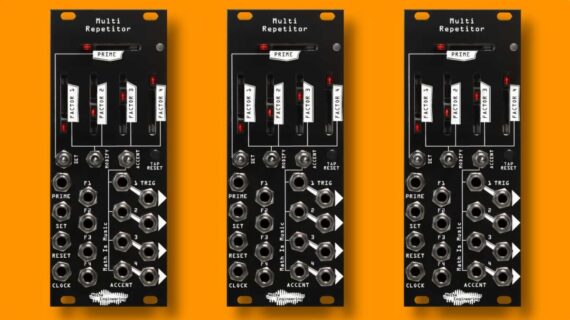
The newly rethought – and reversible – interface based adds extra parameters for more control of all four outputs.

While it keeps the clock and reset inputs, Multi Repetitor also features an internal tap-tempo clock for standalone sequencing. Finally, this version adds four accent gate outputs to the interface. The impetus for these changes, according to the team, was to make the module fit better into compact percussion systems while still being a fun generative sequencer for larger systems.

While it’s possible to get deep into rhythmic modification with the extensive patterns, modification algorithms, and accent options, Multi Repetitor is designed to be a plug-and-play rhythm sequencer. Noise Engineering said that one of their goals was to make it easy to tweak parameters by ear and jam with no preparation required.

Features:

  • Standalone play: tap in a tempo, patch up the outputs, and you’ve got a groove
  • Sequence triggers and accents for up to four voices in your systems
  • Choose from Zularic, Numeric, or Euclidean-derived base rhythm banks
  • Select different base rhythms from the banks using the Prime fader
  • Use three different algorithms to modify each output’s rhythm with the performance faders
  • Modulate your rhythms with full CV control over faders and banks, and keep things in sync with external clock and reset inputs
  • Plug-and-play operation: simple interface designed for performance is easy to use out of the box

The Multi Repetitor is available now, priced at $320 USD.
 

Serendipity L-Thing vs D-Thing+ Give You New Ways To Play Moog DFAM & Labyrinth Synths


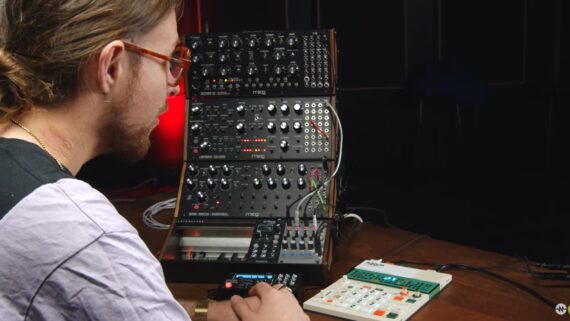
In the video, Sam Stosuur takes a look at the Serendipity D-Thing+ and L-Thing, two devices that offer new ways to play the Moog DFAM & Labryinth synths.

  • The D-Thing+ transforms the Moog DFAM, adding reset, swing, step control, micro-timing, shuffle, reverse, random modes, and MIDI/CV clocking — turning a brilliant but limited sequencer into a powerful performance instrument.
  • The L-Thing is built to pair with Moog’s Labyrinth, providing dual clocks, polymeter and polyrhythm modes, Euclidean rhythm options, and generative sequencing that pushes Labyrinth far beyond its stock behavior — while still working with any CV-capable synth.


Topics covered:

0:00 — Intro: Serendipity + what we’re testing

0:23 — Why DFAM needs this (no reset, studio workflow)

2:23 — D-Thing+ reset explained (DFAM’s biggest quirk)

2:52 — Step length control (1–8 steps)

3:43 — Multi menu: step loops beyond 8 steps

4:58 — Micro menu: per-step microtiming / swing feel

5:02 — Sequencer modes overview (normal, reverse, bounce, odd/even, shuffle)

6:34 — Random mode + MIDI/CV modes

8:35 — L-Thing intro + what it unlocks on Labyrinth

10:03 — Patching L-Thing to Labyrinth (clock + bit flip)

11:06 — Sync setup: D-Thing+ clocking L-Thing + reset in sync

11:34 — LFOs + using it with other Moog (Grandmother/Matriarch)

12:44 — Polymeter setup: beats/bar + length tricks

13:42 — Polyrhythm mode (firmware note + chaos)

14:59 — Fast performance tweaks / weirdness

17:56 — Wrap-up: who these are for + closing

For more info, visit the Serendipity site.


Polyend Synth 2.0 Update Adds Dirt Synth Engine + More


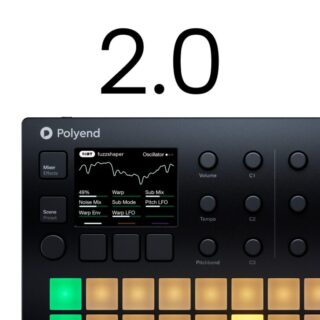
2026 NAMM Show: Polyend has released Synth 2.0, a major firmware update that expands the sound design depth, performance workflow, and creative potential of the Polyend Synth.

Available as a free update for all users, Synth 2.0 introduces Dirt, a new synthesis engine added to the Polyend Play+ late last year, quickselect scene loading, and continued refinements.

New in Polyend Synth 2.0:

Dirt — A Character Driven Synthesis Engine

At the core of Synth 2.0 is Dirt, a synthesis engine focused on waveshaping and warping.

  • Five blendable oscillator shapes with sub-oscillator mix
  • Bi-directional waveform warping modulated by envelopes or LFOs
  • 13 waveshaper modes, spanning saturation, distortion, fuzz, bit-crush, and hybrid textures
  • 60+ new factory presets and scenes showcasing Dirt’s aggressive, lo-fi, and expressive sounds
  • Aftertouch control of all Dirt parameters

Dirt expands the Polyend Synth engine family with a distinctly bold sonic identity — ideal for gritty basses, leads, experimental drones, and textures.

Quickselect — Instant Scene Recall from the Grid

Synth 2.0 introduces Quickselect, transforming the grid into a visual scene launcher to pair with a MIDI controller live or quickly audio presets:

  • Assign and recall up to 60 scenes directly from the grid
  • The active scene is indicated at full brightness; unused pads remain partially lit
  • Reorder and manage scenes quickly with simple commands

Quickselect reduces menu navigation, making live performance patch changes more immediate and fluid.

Performance and Stability Enhancements

Synth 2.0 also delivers under-the-hood improvements for a smoother, more expressive instrument:

  • Improved filter performance and modulation resolution
  • More stable pitch modulation at high LFO speeds
  • Fixes for rare audio dropouts, chord truncation, and edge-case stability issues

Synth 2.0 is available now as a free update.