Best New Synths & Electronic Music Gear Of 2026 NAMM Show

The 2026 NAMM Show, held Jan 22–24 in Anaheim, California, has wrapped up. While not as big an event as it was pre-pandemic, the Show still holds its place as the most important music gear industry event of the year.
The Winter NAMM Show used to be a four-day event, and has been reduced to three days. It’s smaller, too, with organizers eliminating the basement floor from the show, which formerly was used to showcase smaller companies. And, for electronic musicians, the show has had some attrition of vendors, as the new Buchla & Friends show offers an inexpensive alternative.
Nevertheless, the NAMM Show is still where many companies make their biggest introductions of the year, because it’s an event that draws over 100,000 attendees from music retailers across North America and beyond.
Here’s our take on the best new introductions of the 2026 NAMM Show. We have limited consideration to gear that was either introduced, or made its NAMM Show debut, at this year’s event.
Best New Synthesizer – The ASM Leviasynth
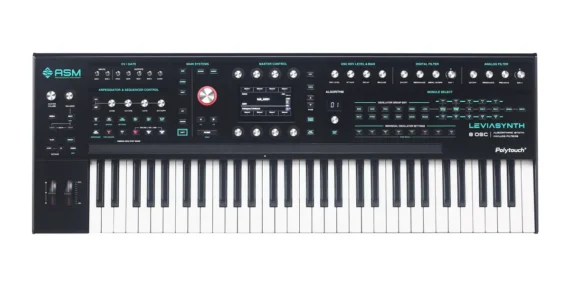
The ASM Leviasynth combines many of the features that have made the company’s Hydrasynth a hit – including rugged build, the Polytouch polyphonic aftertouch keybed and ribbon controller – with a new hybrid synth engine that combines the best of analog and digital worlds.
Like the ASM Hydrasynth before it, the Leviasynth is an audacious new design – offering a great combination of power, expressive control and creative tools.
The Leviasynth had tough competition, though, including the new UDO DMNO synthesizer and others.
Best Performance Keyboard – the Nord Electro 7:
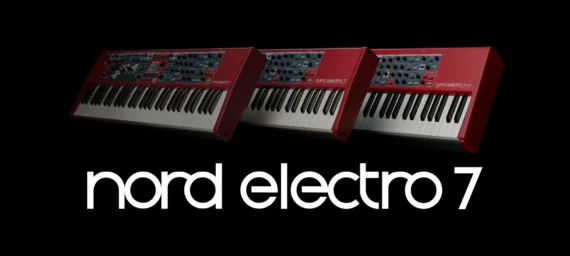
Ahead of the NAMM Show, Clavia announced the release of Nord Electro 7, the latest in its Electro stage keyboard line.
The Nord Electro 7 features a new Synth Section, dedicated per-section effects and an updated panel design with high-resolution color display. It’s available in three models, tailored to different keyboard preferences.
Nord has responded to initial feedback on the Electro 7, and says that they’ll be adding a pitch stick and modulation wheel to the the 73 and HP of the Electro 7.
Kurzweil also introduced the SP8 Stage Keyboard, the latest instrument based on their legendary V.A.S.T. synthesis engine.
Best Vaporware (Tie) – The Casio SX-C1 Sampler & The Behringer JN-80
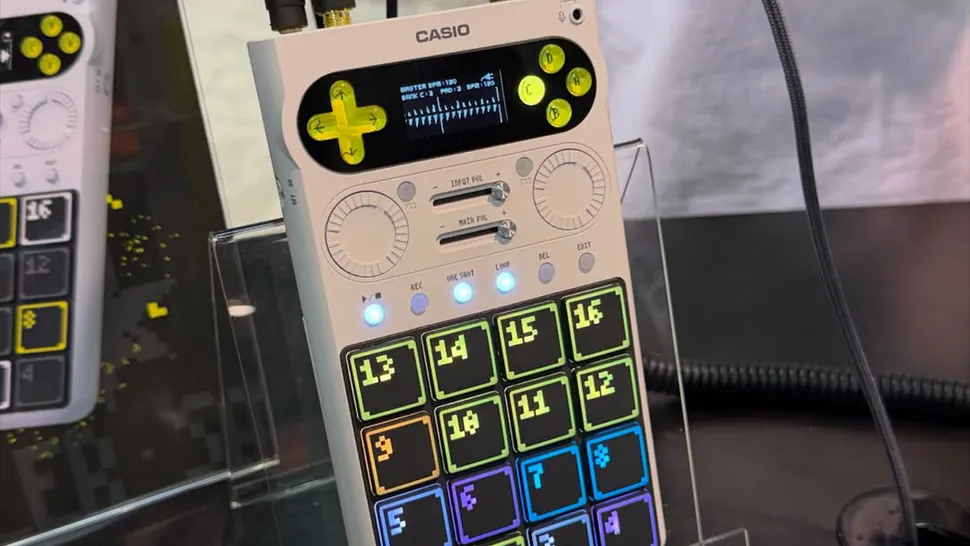
Two new electronic music devices generated a lot of interest at the 2026 Winter NAMM Show, but were presented as working prototypes, with no promise of an actual release.
The Casio SX-C1 Sampler is a fun portable sample and sequencing workstation. Our contact said that it will be released in Japan later this year, but that there’s currently no release plan for the US.
Many musicians have fond memories of Casio’s prosumer electronic music gear of the ’80s, ranging from its line of CZ synthesizers to its sampling music toys. The Casio SX-C1 Sampler promises to bring back that fun, combining an easy-to-use interface with some serious music-making power.
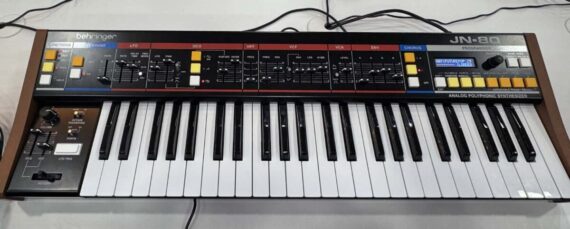
The Behringer JN-80 – previously named the Neptune-80 – is based on the Juno-60, but offers 8-voice polyphony, vs the original’s 6-voice polyphony. It also reduces the size of the control panel and uses a 4-octave keyboard, instead of the 5-octave keyboard of the original.
The JN-80 generated a mixture of responses from readers – ranging from hyped to ‘meh’ – because there’s no official word from Behringer on when, or if, the new synth will be available. The synths that Behringer hyped at last year’s NAMM show have never released, so musicians aren’t sure what to make of introductions like the JN-80.
Based on what we saw at the Show, the Behringer JN-80 is an advanced, working prototype, which tells us that it’s likely to be released – but, unfortunately, who knows when?
Most Scandalous Music Gear Introduction – the Groove Thing
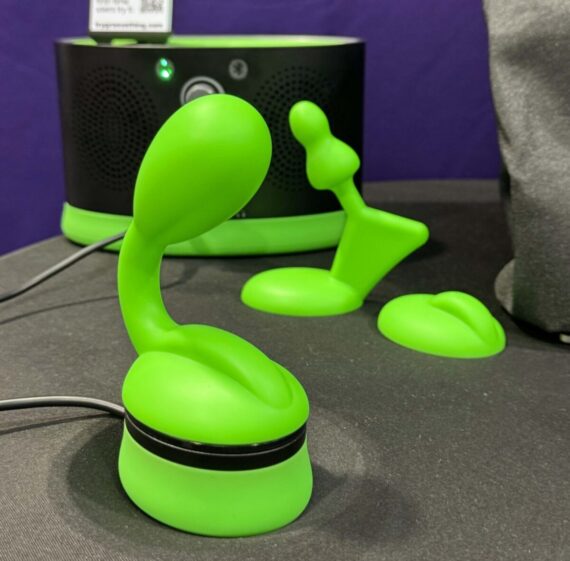
Something that we did not expect to see at the NAMM Show was the Groove Thing (NSFW link) – a Bluetooth speaker system with wired ‘adult’ attachments.
The designers say that the Groove Thing is “like having a third ear,” but where the sun don’t shine.
Best Reincarnation In Electronic Music Gear (Tie) – Generalmusic & Music Mouse
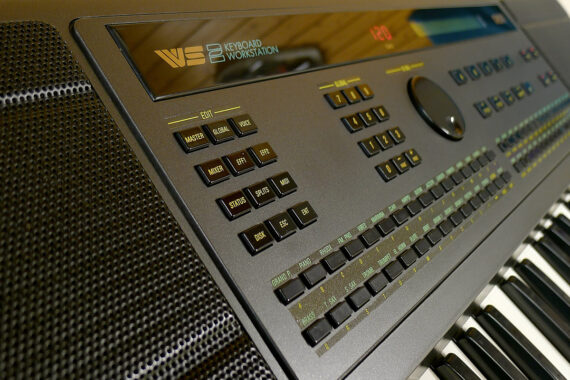
At the 2026 NAMM Show, Italian keyboard and synth maker Generalmusic announced that it’s back in business.
The brand’s releaunch will mark the return of two historic brands: GEM, dedicated to keyboards and digital pianos;and LEM, focused on professional audio, installation, and broadcast.
There’s no word yet on what they’ll be introducing, but they’re promising to make introductions later this year.
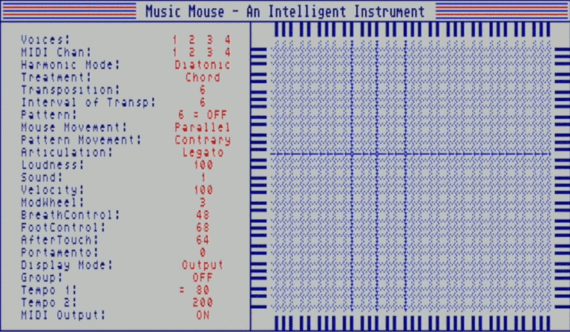
Eventide Audio announced that it is working with electronic music composer Laurie Spiegel to bring back Music Mouse – an algorithmic musical composition application and performance instrument – after 40 years.
This announcement came out of nowhere for many, and has generated a lot of buzz because it’s a much-loved program for some of the musicians that worked with it back in the day, and there’s also a growing number of musicians interested in so-called ‘obsolete software’.
Eventide says that it plans to rerelease Music Mouse later this year, “carefully preserved and prepared for modern systems, without changing what made it special.”
Best Live Effects Box (Tie) – The Korg Kaoss Pad V & The AlphaTheta RMX-IGNITE
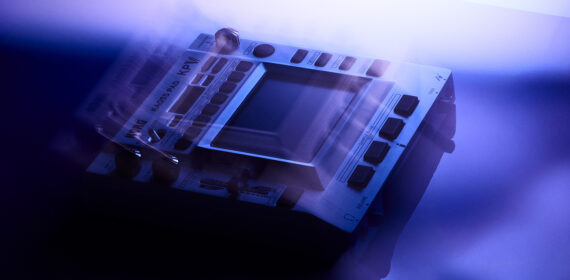
Another ‘when Hell freezes over’ introduction this year comes by way of Korg – the Kaoss Pad V.
The Korg Kaoss Pad line has been popular for decades, but the last hardware Kaoss Pad was released over a decade ago. The Korg Kaoss Pad V features an updated touch interface, new effects and a workflow improvements. It promises to bring back the fun of the Kaoss Pad, but with updated capabilities.
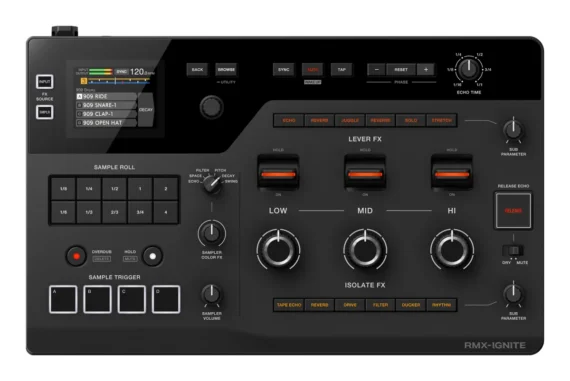
Ahead of the 2026 NAMM Show, AlphaTheta introduced the RMX-IGNITE, a multi-effects box designed for live performance.
The RMX-IGNITE offers a variety of effects, sample playback via four pads, digital I/O and more.
Best Musical Toy – The Stylophone VOICE Sampling Keyboard
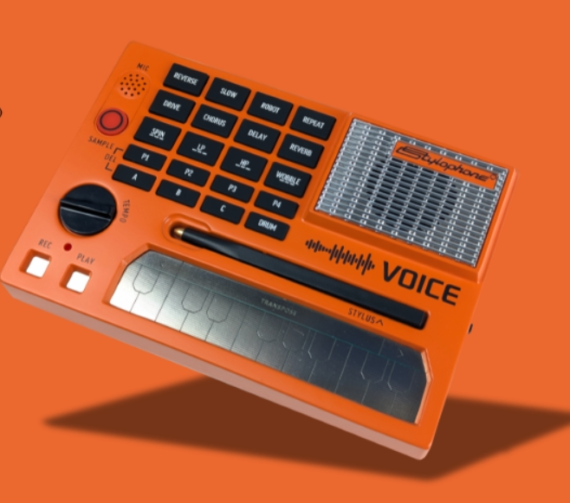
Dubreq/Stylophone has been expanding the range of their line into prosumer and professional territory for several years.
At this year’s NAMM Show, they introduced the Stylophone VOICE – an inexpensive portable sampler that combines the power of sampling with the fun and immediacy of the classic Stylophone stylus interface.
The Stylophone VOICE is expected to be available in Summer 2026, price around $50 USD.
Best Electronics Music Workstation – the Akai Pro MPC XL
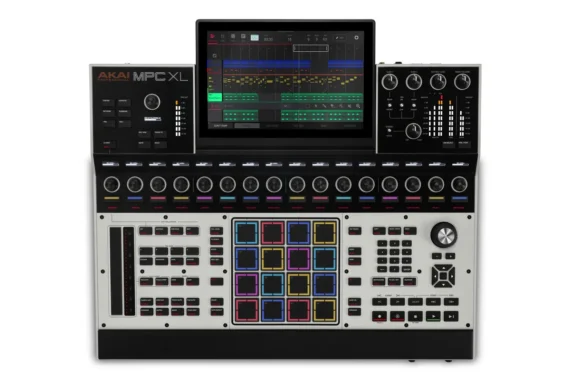
The MPC went through hard times in recent years, with a series of computer-tied workstations that didn’t capture musicians interest in the same way as the classic hardware workstations.
That changed when AKAI Pro refocused on standalone MPC workstations, and introduced devices that are powerful enough and faithful enough to the classic MPC workflow that even MPC creator Roger Linn is a fan.
This year, Akai Professional announced the MPC XL, the most powerful MPC ever made. Akai says that the MPC XL can be the centerpiece of your studio, and that it offers “unprecedented processing capabilities, expressive control, and professional I/O connectivity, all without requiring a computer.”
Best New DJ Gear – The Rane System One

At the Winter NAMM Show, Rane announced the Rane System One, a new system that combines advanced standalone DJ technology with the feel and control of motorized platters.
The System One lets you mix among USB drives, SD cards, music streaming services, and DJ software sources like Serato DJ and Algoriddim djay, all without interruption. Other advanced features include an array of FX and the capability to DJ with Stems.
Best Open Source Gear – Bastl Alchemist, Kastle & Citadel
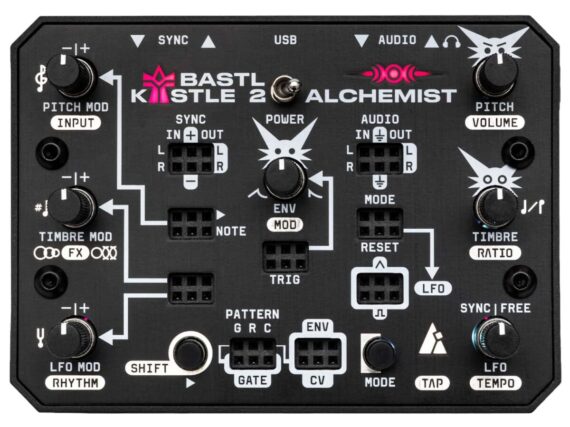
Ahead of the 2026 NAMM Show, Bastl Instruments announced that it is open sourcing the firmware for three of its designs, and making them available as DIY kits.
The kits include:
- Alchemist – Compact Patchable Hybrid-Synthesis Instrument with MIDI
- Wave Bard – Compact patchable stereo sample player
- FX Wizard – Compact patchable stereo multi-effects
Both standalone and Euro format kits are available.
Coolest Booth – The Bob Moog Foundation
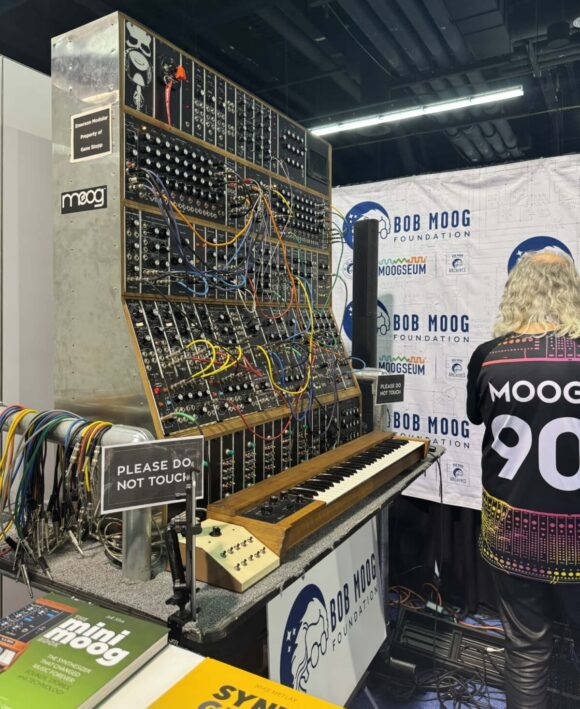
The Bob Moog Foundation always tries to bring its ‘A Game’ to the NAMM Show, and this year was no exception.
This year, the Foundation featured a unique Emerson Moog Modular at their booth, the prototype for Moog’s reissue, created by the late Gene Stopp. The giant system was Stopp’s proof of concept for recreating Keith Emerson’s modular rig – and paved the way for Moog to rerelease its classic Moog modular systems.
In addition to the huge modular system, the Foundation’s booth featured live performances throughout the show, including performances by Andrew Colyer (Circuline), Erik Norlander, Rachel Flowers, and Lisa Bella Donna.
Best New Mobile Music Making Software
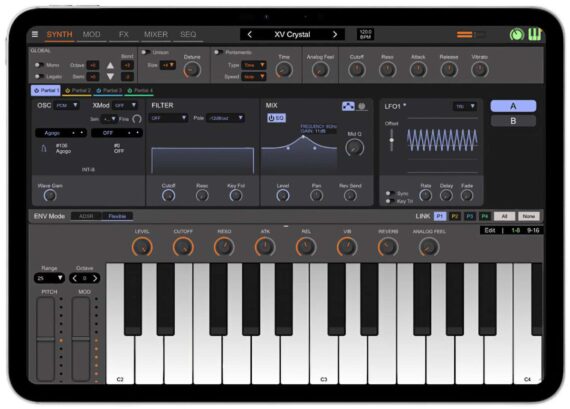
Mobile music making software didn’t have a big presence at this year’s NAMM Show, but Roland made a splash by introducing Zenology GX for iPad.
Zenology GX for iPad brings the same synth engine that power’s the company’s FANTOM and JUPITER-X synthesizers to Apple’s popular tablet platform.
Built on the same advanced sound engine and core feature set as ZENOLOGY GX for desktop, the iPad version offers a massive library of sounds and deep editing tools, with a straightforward touch-friendly interface.
Best New Hardware Effects Pedal – The Polyend Endless
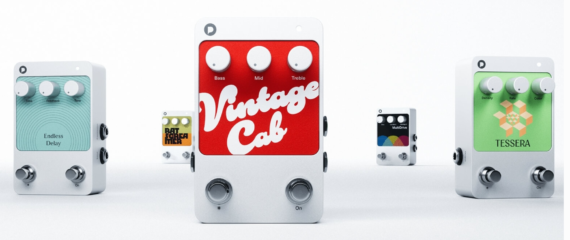
At the Winter NAMM Show, Polyend introduced Endless, a new hardware effects pedal platform that you can customize.
It’s not the first customizable hardware effects pedal, but it’s the first that we’ve seen that offers three options for customization:
- You can load effects from a stock library of options;
- You can code your own custom effects; and
- You can use Polyend’s Playground to ‘vibe code’ your own custom effects, with no coding required.
We’re interested to how this is adopted, and whether ‘vibe coding’ can really deliver new types of effects that people will want.
Best New Drum Machine – Drumboy Pro Edition
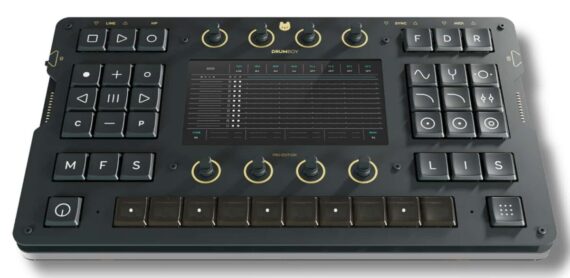
At this year’s NAMM Show, Randomwaves shared a sneak preview of the Drumboy Pro Edition, a new, open-source drum machine design that they say will be available to pre-order in mid-March for about $240 USD.
The describe Drumboy Pro Edition as ‘studio quality’ hardware, with a large screen, lots of hands-on control, flexible input/output, and a rechargeable battery for portability.
It’s designed to be hackable and modifiable, with complete source code to available on Github.
Most Creative New Instrument – The Korg Phase8 Acoustic Synthesizer
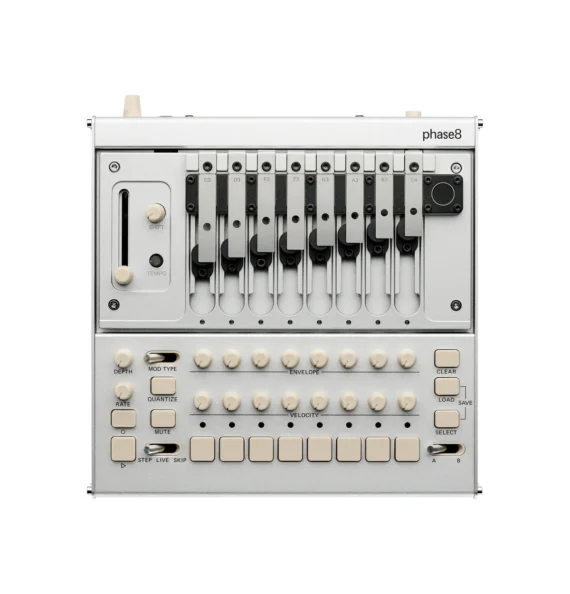
The Korg phase8 is one of the most unique instruments introduced at this year’s NAMM Show – an electro-acoustic instrument, based on the concept of acoustic synthesis.
Acoustic synthesis has been a fairly niche concept to date, implemented on instruments like the Vo-96 Acoustic Synth and the String Armonica. It’s based around the idea of using electronics to control the vibration of physical objects – like strings on a guitar – which makes it possible to create sounds that would not otherwise be possible on an acoustic instrument.
The phase8 is probably the most limited of these devices – offering a small range of notes and relatively constrained sonic possibilities. The phase8 is not going to be a ‘go to’ instrument for ‘bread and butter’ synth and keyboard sounds. But the phase8 is also the most polished acoustic synthesis instrument we’ve seen, with sturdy hardware, a user-friendly hands-on interface and lots of options for expressive performance.
With the phase8, Korg is testing the waters for making acoustic synthesis mainstream – and we are excited to see where this leads.
The Best Of NAMM 2026
That’s our take on the best of the 2026 NAMM Show. Did we miss anything that wowed you? Do you think some instruments don’t live up to the hype?
Leave a comment and share your thoughts on this year’s introductions, and what you think is the best new gear introduced at the show!