Antares release Auto-Tune Pro X, Native Apple Silicon support
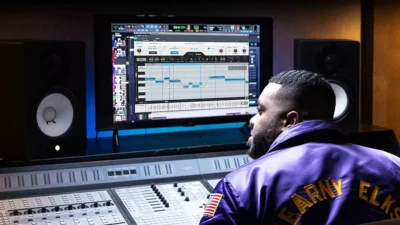
Developer Antares release Auto-Tune Pro X, promises faster pitch correction and new artist presets.

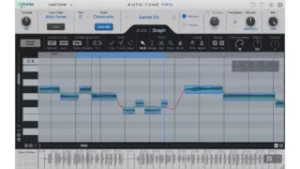
Said to be the fastest version of Auto-Tune yet, ‘X’ features a new Graph Mode with a simplified note-object view and streamlined user interface that are designed to make it easier to use.

Auto-Tune Pro X features native support for Apple Silicon Macs for increased speed and efficiency, while the Multi-View feature enables you to quickly switch between separate Auto-Tune tracks in a single window for faster multi-part vocal editing.
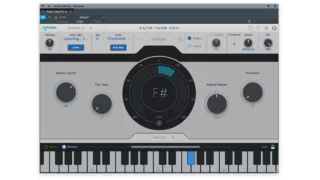
New artist presets, mean more jumping off points, and both these and your most commonly used settings can be accessed in the new presets manager.

Auto-Tune Pro X runs on PC and Mac, with a perpetual licence costing $459. This includes one free year of Auto-Tune Unlimited, Antares’ subscription service, which also gives you access to every current edition of Auto-Tune, the recently released plugins Auto-Tune Vocal EQ, Auto-Tune Slice, Auto-Tune SoundSoap and Auto-Tune Vocodist, and 11 more vocal production tools.

Alternatively, you can just sign up for Auto-Tune Unlimited and get Auto-Tune Pro X included. This costs $24.99 a month, or $14.58 a month if you commit to a year’s membership. Additionally, you can sign up to a 14-day trial of Auto-Tune Unlimited, regardless of whether you’ve had previous trials or subscriptions. Find out more on the Antares website. Auto-Tune Pro X runs on PC and Mac in VST/AU/AAX formats.


AMEI developing Open Source MIDI 2.0 Host Driver for Windows


The Association of Musical Electronics Industries (AMEI), the organization that oversees the MIDI specification in Japan, has announced that it is committed to funding the development of an open-source USB MIDI 2.0 Host Driver for Windows Operating Systems, under a memorandum of understanding between AMEI, AmeNote Inc, and Microsoft.

AMEI is underwriting the cost and has engaged AmeNote Inc. to develop the driver, because of AmeNote’s experience in MIDI 2.0 and USB development.

In addition, Microsoft has agreed to start development of a Windows standard open-source MIDI 2.0 API. The driver and API will be managed as a permissively-licensed (MIT license) Microsoft open-source project. Anyone will be able to participate in the development, as an open-source contributor in the future, or to use the code in their own devices or operating systems.

Because of this open source arrangement, continuous and timely improvements and enhancements to the USB MIDI 2.0 Host driver and MIDI 2.0 API are expected. Development is currently underway with the goal of completing the development in 2023.


MIDI 2.0 is a global industry-wide effort. The MIDI Association (TMA), is the organization that oversees the MIDI specification, in all other areas of the world besides Japan.

TMA recently funded AmeNote’s development of the ProtoZOA, a USB MIDI 2.0 prototyping board that software developers can use to test with their MIDI 2.0 applications. AmeNote plans to release large parts of the ProtoZOA firmware as open-source code, so all hardware developers can use that code and incorporate it in their own MIDI 2.0 devices.

TMA members Apple and Google have already announced and released their support for MIDI 2.0. AMEI and TMA have also recently engaged with members of the ALSA community about the development of open-source drivers and APIs for the Linux platform.


iZotope Audiolens give you an easier way of making your own music sound like the tracks you love


Could Audio analysis software promises to speed up your track referencing workflow?

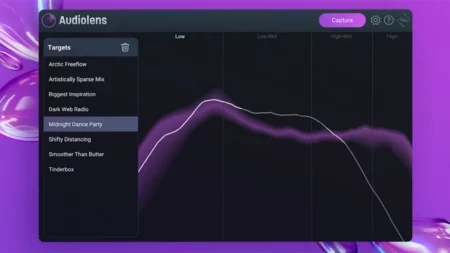
iZotope is promising to make track referencing easier than ever with the launch of Audiolens, a free (for a limited time) desktop application that will analyse audio from any streaming platform or other source without the need to download any files or set up any routing.

The theory is that Audiolens will make it easier to make your own music sound more like the tracks you love. Specifically, in regard to their tonal balance, width and dynamics.

In addition, reference analysis from Audiolens will seamlessly integrate with iZotope Ozone 10 and Neutron 4  plugins. Once the relevant reference target is loaded into one of these tools, you can use their AI-powered assistants to match the mastering (Ozone 10) or mix (Neutron 4) settings, which you can then customise yourself.

To use Audiolens is simple: play your song, then hit Capture in the software and it will start analysing its audio characteristics. Ideally you need to do this for at least eight seconds; Audiolens will automatically stop analysing after three-and-a-half minutes.

There’s no recording on Audiolens- It is simply capturing information regarding loudness, EQ, dynamics and stereo width.

You can then name the track referencing profile and save it, with this profile immediately becoming accessible in Ozone or Neutron.

Additionally, Audiolens works on solo tracks eg, – guitar, bass, drum or other instrument parts.

You can currently download Audiolens for free on PC and Mac (you’ll need to create an iZotope account to do so), but only until 22 November, after which you will have to pay for it.

Audiolens is available for download on the iZotope website now.