PSP BinAmp recreates the ‘warm and rich’ sound of the Binson Echorec 2’s Class A triode tube preamp
PSP’s BinAmp captures the legendary tone of Pink Floyd’s favourite delay in software

The Binson Echorec 2 is a legendary effects unit that helped to shape the sound of many influential recordings throughout the ’60s and ’70s.

But its most famous association has to be with Pink Floyd; this magnetic drum delay machine was a favourite of David Gilmour’s and a fixture in his ’70s rig.

The Echorec was revered not only for its abilities in the delay department, but also its overall tone, a warm and characterful sound produced by the unit’s Class A triode tube preamplifier.

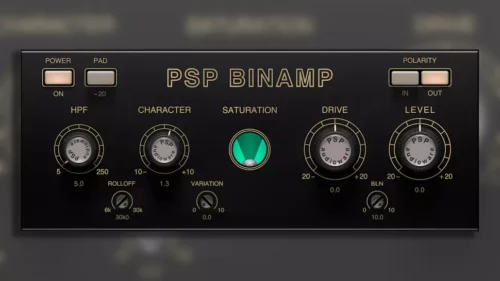
It’s this very tone that PSP audioware has attempted to recreate in its latest plugin release, the PSP BinAmp. It’s a preamp plugin aimed specifically at capturing the sonic character of the Echorec’s preamp stage, an ‘unequaled tone’ beloved for its richness, saturation and analogue warmth.

BinAmp offers the user a variety of options for sound-tweaking, including controls for Character and Drive, a high-pass filter and high-frequency roll-off to shape the plugin’s frequencies, and a control for achieving the desired balance of saturation.

The Variation control enables you dial in subtle behavioural differences between multiple instances of the plugin, emulating the unpredictability of the analogue equipment the plugin’s inspired by. BinAmp looks the part, as well, and is equipped with a Magic Eye display for metering saturation and output levels.

PSP BinAmp is available now for Mac and Windows in VST/VST3/AAX/AU formats for an introductory price of $49, till August 14 (regular price $99).

Find out more on PSP Audioware website.
Behringer introduces Radar Contact and Pickup Mic for Eurorack Modular Synthesizers


Behringer today introduced Radar, a contact & pickup mic module for Eurorack modular synthesizers.

The Behringer Radar appears to be closely based on the Mutable Instruments & Music Thing Modular Ears module.


What Behringer say about it:


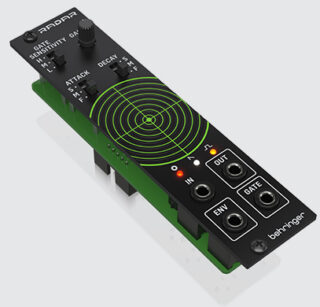
“The RADAR sports a pickup microphone placed right underneath the surface of the module. Simply tapping or scratching the textured surface will convert those into signals that can be patched into any module of your choice to create ambient, echoey sound effects, creepy bangs or any sound you can imagine!

The pickup on the RADAR is even sensitive enough to capture any surrounding acoustic waves be it a knock on your modular case, a snare hit from your drummer or even sounds coming out of loudspeakers. Those sounds can then be converted into gate or envelope signals and tweaked with the Gate Sensitivity or Attack and Decay controls respectively.”

[ad#ad-1]

Features:

  • Pickup microphone to generate wide range of sonic pulses and impulse combs
  • Create unique sounds by scratching and tapping the RADAR surface
  • Collect acoustic waves surrounding your modular case including loudspeakers
  • Connect external microphones, electro-acoustic instruments such as guitars or line-level signals
  • Amplifier with up to 50 dB of gain for a wide range of signal sources
  • 3 indicator LEDs to monitor input clipping, envelope follower level, and gate detector activity
  • Gate detector with 3 sensitivity levels translates taps into gate signals
  • Envelope follower with 3 attack and release times converts tap profile into an envelope CV
  • 4 controls and switches give you real-time access to important parameters
  • Eurorack specs: 6 HP,10 mA +12 V, 5 mA -12 V

The Behringer Radar is shipping from their factory now, with a list price of $79.


Ujam UFX Reverb Plugin Add AI is the most ‘2023’ as reverbs get


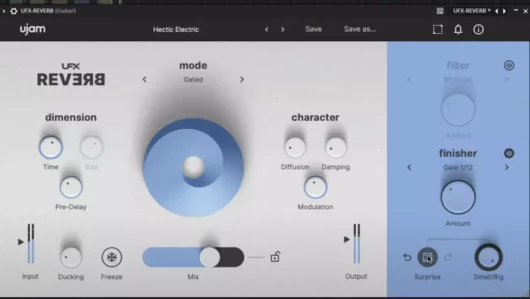
There are many effect plugins out there are being designed with more descriptive section names to make them easier to understand. Ujam’s new UFX Reverb is a case in point. Add a sprinkling of ‘AI’ and this could be the most ‘2023’ plugin out there.

The main modes in UFX Reverb might not sport familiar names then, but they do contain everything you need from a reverb. Mode has the main Reverb type, with a drop-down menu containing 10 reverb engines including Room, Hall, 80s, Reverse and Gated.


The Dimension Mode is all about reverb times, so you get controls for Predelay, Time and Size, while Character is about the physical room interaction with Diffusion, Damping and Modulation controls.

The standout area could well be the effects section to the right of the UI though. Here you get 25 filter effects ranging from standard EQs to distortions, bit crushers and lo-fi effects that will take your reverbs in many a new direction.

The Finisher section contains 50 more abstract effects that can take your reverbs into completely uncharted waters under five section headers called Basic, Move, Delay, Glitch and Beyond.

A quick tour of UFX Reverb

The neatest part of UFX Reverb is how easy it is to create your own reverbs, with everything set up so you can’t really go wrong. There’s even a ‘Surprise’ option that enables you create reverbs using random values – the parameter ranges of which you can customise – which presumably uses the AI side of the plugin to come up with results that always work.

UFX Reverb looks like being one of the widest-ranging and wildest sounding reverbs we have come across, with potentially enormous flexibility.

UFX Reverb priced at $48.99/£51/€57, and 30 days free trial available.  Find out more on the Ujam website.