Software Synthesizers & Samplers

Roland Unveils Melody Flip ‘Generative AI Tool’ Promises To Make AI Your Composing Partner
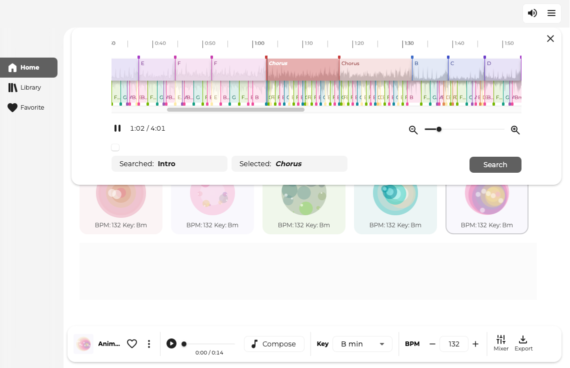

Today, Roland Corporation announces Melody Flip, an artificial intelligence-powered melody-generation application, created in collaboration with Sony Computer Science Laboratories. It is designed to inspire new melodic ideas.

However, Roland is at pains to present Melody Flip as a musician-friendly application of the technology, describing it as embodying “Roland’s vision of technology as a partner that coexists with the creative process.”

The application itself is a tool designed to analyse existing audio, presenting users with information on its various musical attributes, as well as generating a variety of musical ‘options’ that can be used to build on and develop the original source material.

“In recent years, AI and other emerging technologies have advanced rapidly in music production,” Roland says in its announcement. “Roland’s view is that these tools should not replace the artist, but instead amplify them, supporting a workflow where human intent, taste, and creativity remain at the core, with technology acting as a partner or co-creator, rather than a main creator.”

Melody Flip puts this philosophy into practice by letting you import an audio file and automatically analyze its musical DNA, including the structure, BPM, key, chord progression, genre, mood, and more. It then pairs the analysis with a library of about 300 ‘creative palettes’ (predefined musical styles and tonal directions) to help you generate new melodic ideas. Users are then free to edit and rework these ideas as needed, in Roland’s words, “treating the technology like an active collaborator.”

Roland says that the result is a new kind of production workflow, where humans and software work side by side to bring music to life.

Powered by Sony CSL’s Expertise in AI-Assisted Music Creation

Melody Flip incorporates technologies derived from Sony CSL’s research in AI-assisted music creation.

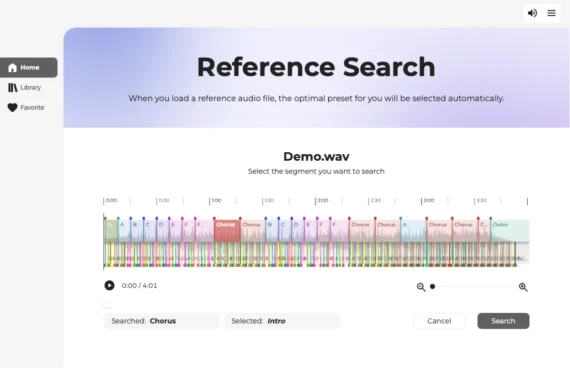
For example, Melody Flip extracts musical elements, including structure, BPM, beat positions, key, chord progression, genre, and mood, from the imported audio file and recommends suitable creative palettes based on its characteristics.

This functionality not only supports the generation of new melodic ideas but also helps creators visually understand the song’s structure and key, ultimately improving workflow efficiency.
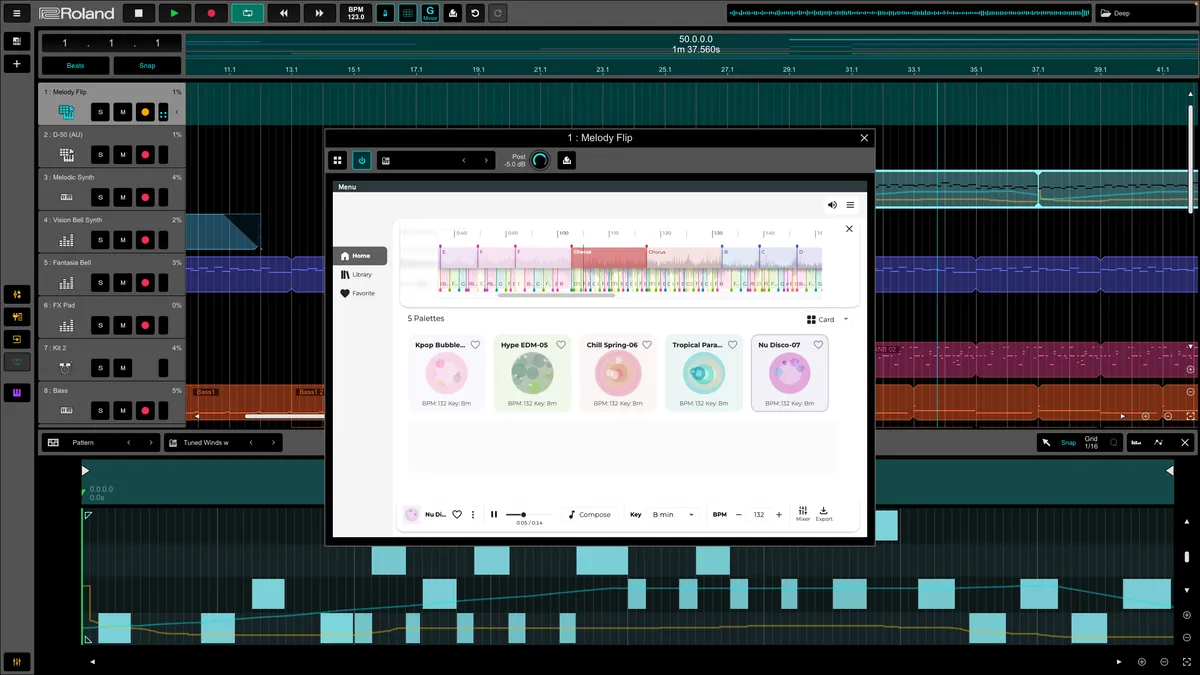

Melody Flip will be available for macOS and Windows as a plug-in that will work within standard DAWs. Users can export generated melodies, as well as chord, bass, and drum parts, in both audio and MIDI formats.

“Roland has always been committed to supporting the evolution of music culture through electronic musical instruments and production tools,” says Roland CEO and Representative Director Masahiro Minowa.

“Melody Flip represents a significant step forward in the era of responsibly developed AI, introducing a future in which technology and people work together and elevate creativity. As we move forward, Roland will continue to expand the boundaries of musical expression with innovative products and services that amplify creators’ instincts and connect human sensitivity with the full potential of technology.”

Melody Flip will be available via Roland Cloud Manager in May 2026. Pricing is to be announced.

For more on Roland Cloud, head to the official website.
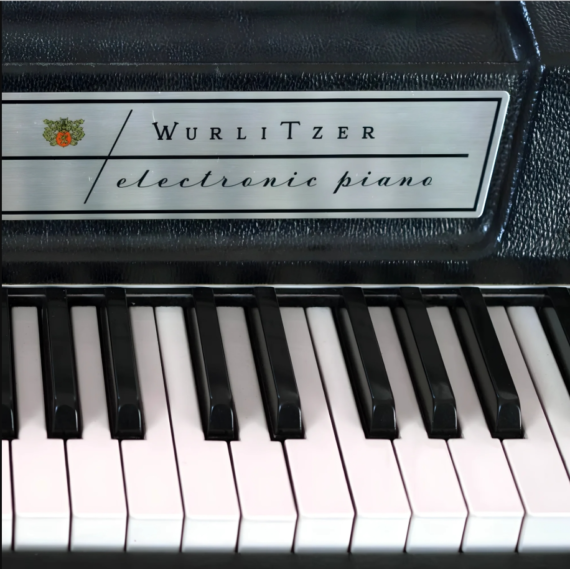


Free Retromulator Update Add Wurlitzer 200A & Yamaha OPL3 Emulations


Retromulator – a free hardware synthesizer emulation plugin – has been updated to version 1.2.

Retromulator 1.2 features two new hardware cores: the Wurlitzer 200A physical model piano and Yamaha OPL3 FM synthesis, along with expanded Akai S1000 browsing and import capabilities.

Here’s what’s new:

New Hardware Cores:

  • Wurlitzer 200A: Physical model piano via OpenWurli, ported from ~3,000 lines of Rust to C++ and integrated directly into the JUCE plugin framework. Models the tine, pickup, and tone bars of the classic electric piano with per-voice physics.
  • Yamaha OPL3: FM synthesis via Nuked OPL3 v1.8 cycle-accurate emulation by Nuke.YKT, with SBI instrument loading, folder-based bank browsing, and zip import support.

Other Improvements:

  • OpenWurli settings panel with live parameter editing via combo and navigation pill.
  • Akai S1000 browse folder mode with auto-slice drum mapping and state persistence.
  • Akai S1000 ISO/BIN/CUE disk image loading.
  • CC20 global tuning support with auto-slice and tuning state recall.
  • Import/Export/Delete and drag & drop support for all cores.
  • Engine author credits in synth selector.
  • Bug fixes.

Retromulator is available as a free download for Windows, macOS (including Apple Silicon), and Linux in AAX, AU, VST3, and standalone formats.


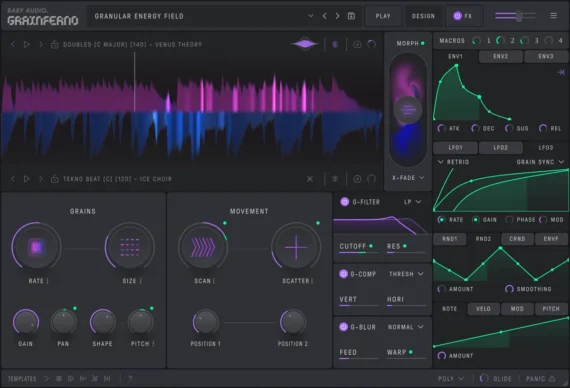
Baby Audio Launches Grainferno ‘Most Advanced Granular Synthesizer To Date’


Grainferno is granular synthesis redefined – a firestorm of granular power for Mac & Windows.

Baby Audio has launched its ‘most advanced synthesizer to date’, Grainferno, which promises to create playable synth tones from any sampled sound.

As with other granular plugins, Grainferno works by breaking recorded audio down into very small sections, known as grains, and shaping its sound through the manner in which it plays these back. What sets Grainferno apart from other granular synths, according to its developer, is the ability to generate grains at speeds that cross into the audible range.

According to Baby Audio, “at these rates, grains stop behaving like texture and start acting like oscillators, turning any audio file into a playable synth voice with the sonic fingerprint of the original audio.”

Users can drag and drop samples into Grainferno’s sample visualiser in WAV, AIFF, FLAC, MP3 or Ogg Vorbis file formats, or draw on a varied pool of 378 audio files. The synth uses a dual sample engine that can load two source files simultaneously and allows users to freely morph between them.

The granular engine features a variety of controls for manipulating and modulating grain playback. There’s also a multimode filter, compressor and ‘blur’ effect for further refining the granular output.

This, according to the developer, makes Grainferno capable of creating “entirely new textures, enabling synth-like tonal instruments, lush evolving atmospheres and volatile digital noise.”

Along with the granular engine itself, Grainferno features a drag-and-drop modulation system, with available sources including envelopes, LFOs, randomisation tools and various expression inputs. The synth also allows for cross modulation between these modulators.

Grainferno features an extensive effects section with six modules that can apply a variety of processes, from filtering and compression to reverb and delay, analogue-style modulation effects, multimode saturation and more.

For users that don’t want to get into the nitty gritty of granular synthesis, Grainferno has a Play View UI option that strips back the controls to just sample selection and a group of four macros. The synth also has 300+ presets for users to get stuck into.

Here’s a look at getting started with Grainferno:

Grainferno is out now, priced at $139.32, but currently available at an introductory price of $85.32. Visit Baby Audio site for more information.