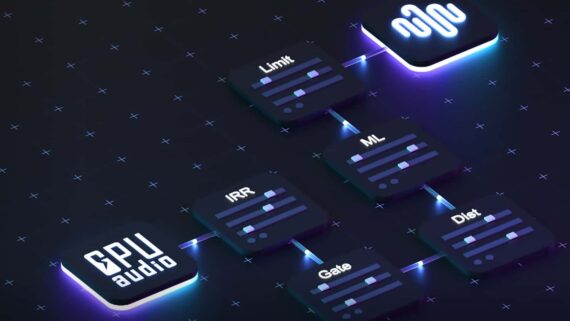
GPU Audio, a company that’s helped pioneer using powerful GPU graphics cards for audio DSP (digital signal processing), has announced Soundcore, their new Pro Audio division, and a new tool for real time audio separation.
The company has branded its Pro Audio division as Soundcore. Soundcore from GPU Audio will be the technology at the heart of their vision for Pro Audio acceleration and they’re proud to share this news with you today.
Soundcore offers a variety of capabilities, including:
Standalone App and Plugin Development
Realtime Neural Network Inference
Cloud Processing
High Channel Count Processing
The company also shared that it’s introduced a new tool for real-time source separation, utilizing deep learning for music demixing.
Demixing is a fairly new capability in the pro-audio field, allowing you to split a mixed track of audio into individual components. This can be a powerful tool for remixing, processing pre-recorded audio and more.
GPU Audio’s latest SDK module provides a neural network adapted for real-time low-latency applications, which they say offers “huge potential for remixing and noise-cancelling audio streams in real-time.”
The system uses a combination of spectral and waveform domain data, providing accurate and artifact-free processing, and uses GPU Audio’s patented technology to deliver extremely low latencies.
The GPU Audio SDK is available now and is free to download and evaluate.
Developer Patrik Skoog let us know that he’s released a new tool, Echoe, that he designed to make it easy to share stems, tracks and other audio files without the hassles of other tools, like compressed previews and expiring links.
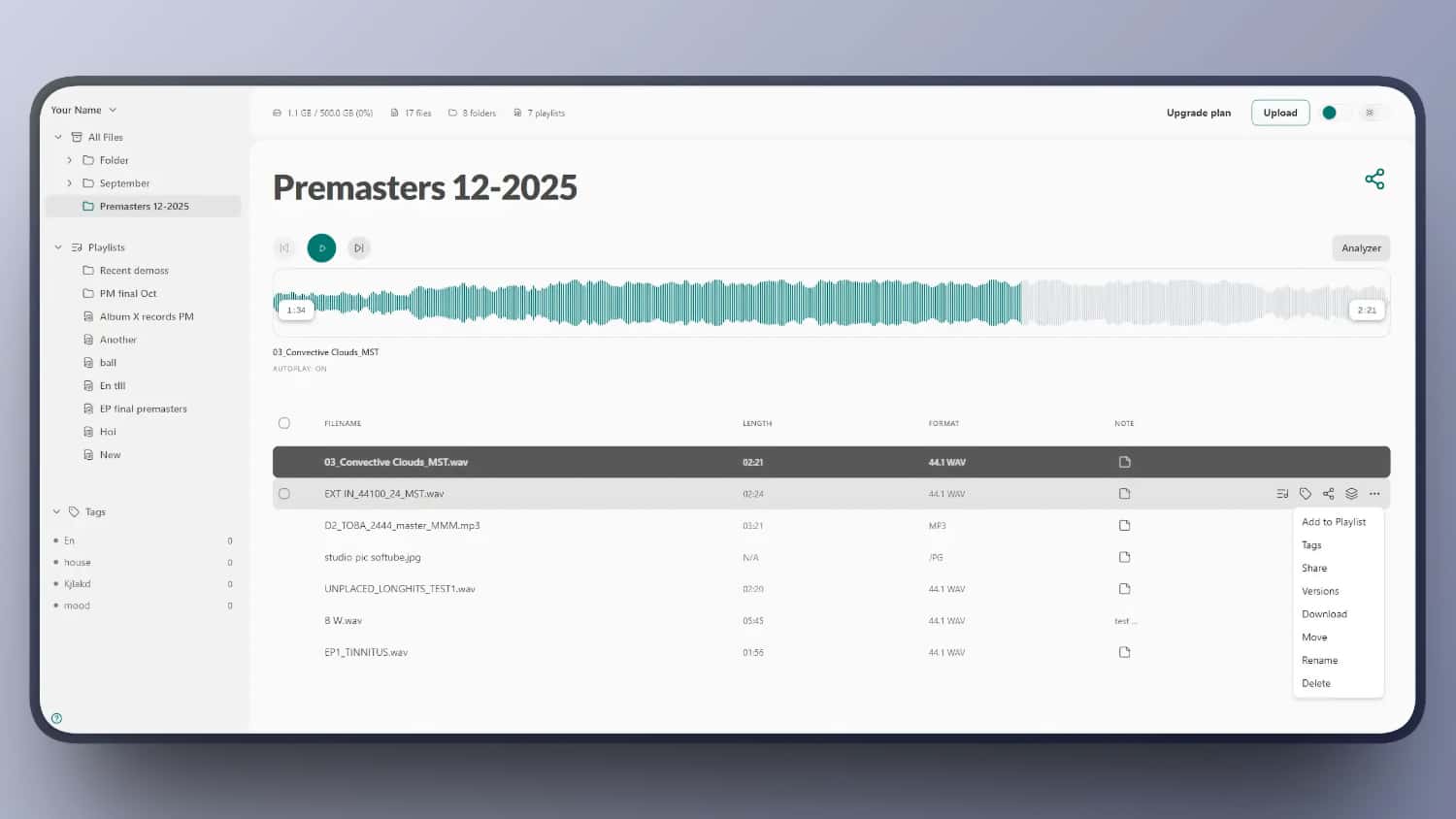
Echoe streams WAV/AIFF, has playlists and notion-style folders, share links, comments anyone can reply to, tags, versions, and notes.
Skoog says that Echoe is built specifically for audio workflows, rather than social sharing platforms like Soundcloud, so it’s tailored to the needs of audio professionals.
Features:
Unlimited Upload – Upload masters, demos, stems, and mixes — and also zipped project folders and image files
Instant Previews – Waveform and frequency analyzer playback generated immediately upon upload
Smart Organization – Keep projects tidy with folders, playlists, versioning, file notes, and tags.
Visual Context – Attach artwork to playlists by uploading your own or stock images via Unsplash
Secure Sharing – Create private links for clients and protect sensitive unreleased material with passwords
Time-Stamped Feedback – Collaborators can comment directly on the waveform — toggle on or off per playlist
Echoe is available now. A Free tier lets you try it out with 1GB of storage. If you like the tool, paid options are available, starting at €10/month for 500GB of storage.
Noizefield has introduced Audio Plugin Coder (APC), a free, open-source tool that’s designed to let you create custom audio plugins without coding.
APC falls into the new category of ‘vibe coding’ development tools, which essentially let you use natural language prompts to describe what you want, and the tool does the coding for you.
It’s available now, and tested on Windows 11 and Linux.
Here’s what developer Max Pfetscher has to say about it:
“I’ve developed an open-source tool called Audio Plugin Coder (APC) that uses AI to help music producers create their own audio plugins without needing to know C++ or any programming. The idea came from seeing so many talented producers with brilliant ideas for custom effects and instruments, but no way to bring them to life without learning complex coding.
The project is completely free and open source, and I’m actively looking for feedback from the community to make it as useful as possible.”
Features:
LLM-Driven Development – Designed to work with Antigravity, Kilo, Claude Code, Cursor, or any coding agent.