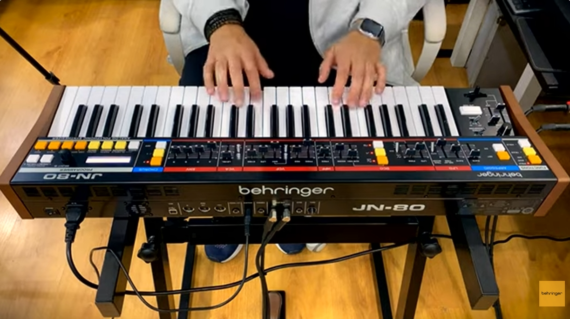
Today Behringer shares this hands-on demo of their new JN-80, their ‘supercharged’ take on the Roland Juno-60.
The Behringer JN-80 copies the look and architecture of the Juno-60, but offers 8-voice polyphony, vs the original’s 6-voice polyphony. It also reduces the size of the synth to fit into the Deepmind 12 form-factor and uses a 4-octave keyboard, instead of the 5-octave keyboard of the original.
Notably, the JN-80 offers a keyboard with aftertouch, extending the performance options of the synth beyond the original.
Watch the video demo, and share your thoughts on the Behringer JN-80 synthesizer in the comments!
The Behringer JN-80 is available to pre-order, priced at $569 USD outside the US. Behringer doesn’t list a US price, but readers report street prices for US pre-orders being about $100 higher because of the current tariffs.
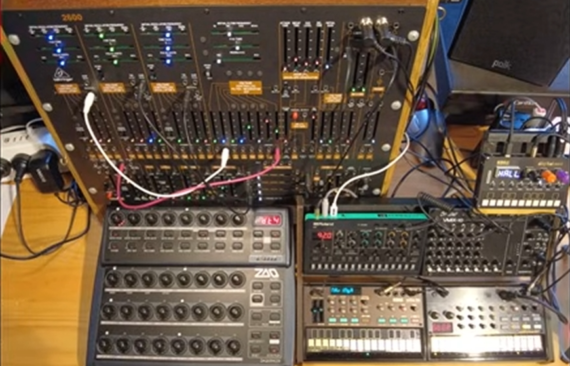
Synthesist Gary P Hayes shared this Berlin School style synth jam, Morphogenesis.
The jam is performed with Zaquencer – an unofficial firmware for the Behringer BCR2000 that turns it into a multi-channel step sequencer. Behringer has previously announced to bring back the BCR2000 in compact form – and to include Zaquencer as a factory option.
Here’s what Hayes shared about the technical details:
“The 4 track Zaquencer….is great for on the fly changes to step pitch (and whole track pitch), the wonderful step skip and mute, chords and inversions, ratchets, track step speed & polymetric / rhythm, various midi ctrls per step (2 separate ones) and a lot more.
Here I try a few of these an hour after getting it plugged in – 3 tracks into my bARP (doing 3 oscs, noise and 2 sustains), FM2 doing tuned perc and the Roland S1 doing analog synth things.
An obvious influence in many places to minimalism, but really a great exercise for me to learn how to best use the Zaq.”
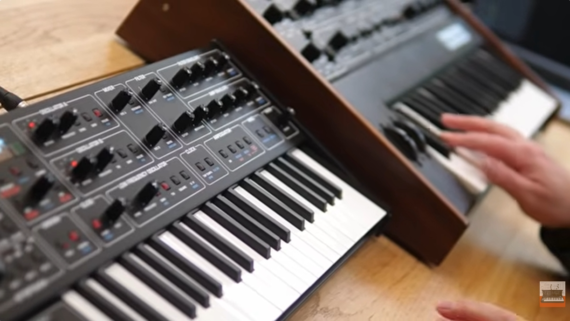
Synthesist Starsky Carr – in his latest video – shares a head-to-head comparison between the classic Sequential Circuits Pro-One monophonic synthesizer and the new Sequential Fourm.
“At first glance, the architecture looks familiar,” notes Carr. “But the big question is this: does the Fourm capture the raw punch, deep bass, and aggressive character that made the Pro-One a cult classic?”
Watch the video and let us know what you think in the comments!