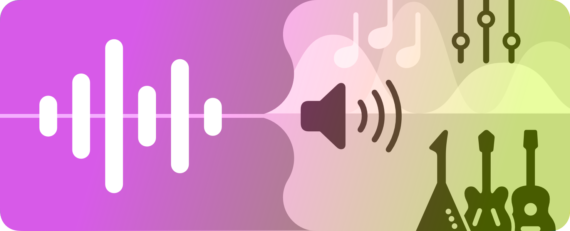
At WWDC 2026, Apple introduced the Music Understanding framework, an on-device audio analysis tool for Apple platforms.
It allows apps to process audio and extract detailed, time-stamped information across six core musical dimensions: rhythm, key, loudness, pace, structure, and instrument activity:
Analyze Rhythm: Detects beat positions, bar boundaries, and tempo in beats per minute (BPM).
Key: Identifies the musical key (tonic and mode) over specific time ranges.
Loudness: Measures perceptual loudness (integrated, short-term, momentary, and peak) matching industry standards.
Pace: Measures the perceived energy and momentum as events-per-minute, independent of the fixed tempo.
Structure: Breaks down songs into structural sections, segments, and phrases.
Instrument Activity: Identifies which instruments are playing and exactly when they are active.
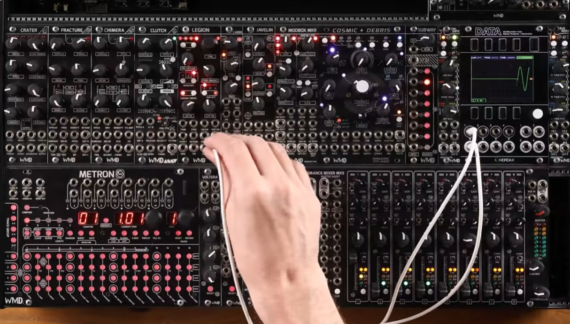
In the latest WMDevices video, host Alex “Nasty Nachos” Anderson offers an introduced to control voltages in modular synthesis.
In modular synthesis, control voltages (CV) are low-voltage electrical signals used to control parameters of the sound, rather than carry audio.
A CV can tell an oscillator what pitch to play, open or close a filter, change an LFO’s speed, adjust envelope times, control amplitude, or automate almost any other function that accepts modulation. This is what makes a modular synth “patchable”: instead of fixed internal routings, you connect CV sources—such as keyboards, sequencers, envelopes, LFOs, random generators, or touch controllers—to CV destinations with patch cables.
Some CVs are continuous and smoothly changing, while others act more like on/off signals, such as gates and triggers, which are used to start notes or fire events.
CV is the language that lets the different modules in a modular synth communicate “talk” to each other and shape the sounds that you make.
What would you tell someone trying to get started with control voltages in modular synths?