Archive for April, 2023

Clatters Machines introduces SIBILLA Stereo Digital Oscillator for Eurorack Modular Synthesizers

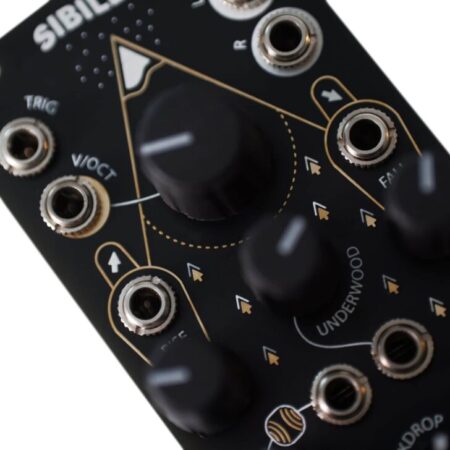
Clatters Machines has introduced Sibilla, a stereo digital oscillator in an 10HP Eurorack module.

The module sculpts sound with various saw and sine waves, running through intricate delay networks altered by LFOs (Low Frequency Oscillators) and white noise, to create constructive and destructive interferences, enabling ever-evolving soundscapes that can be both droning and/or melodic in nature.
“Living by the sea can be peaceful and inspiring, but also quite stressful as the tourist season reaches its peak and, all of a sudden, a small town doubles its number of citizens,” continues Clatters Machines Co-founder, engineer, electronic designer Michelangelo Nasso. “Those are the moments in which we’re constantly looking for air and a new space that is able to inspire us while calming our nerves! Luckily, we live in a weird region in which a 40-minute drive means the difference between swimming in the sea and hiking at 2000m above sea level, surrounded by semi-barren lands which actually make you forget for a moment that you’re still on planet Earth. One of those magical places is called Monte Sibilla — Sibella Mountain, and our new module tries to pay tribute to it.”

As a stereo digital oscillator, Sibilla’s L/M (left/mono) and R (right) channels are the output stages of two audio feedback loops, each of which is made up of a main sub-sinusoidal wave oscillator and two saw and sine waves with frequencies affected by the generation of (right-channel) harmonics and (left-channel) sub-harmonics. The waves have different phases, with respective offsets constantly affected by minor variations created by two pairs of GRAINS, randomly fluctuating within the waves’ amplitude spectrum and being sampled at a certain speed.

The waves meet each other at a so-called ‘common point’ — where everything happens and changes continuously — together with two white noise sources, creating constructive and destructive interferences that are affected constantly by two LFO movements. Moreover, such interferences are then run into a resonant low-pass filter and distributed to four different delay lines from where they are finally fed back into the audio loops at different time intervals, depending on the GRAINS movement.

Official tutorial video:

Sibilla is available now for €360 (plus VAT, if applicable).
Audulus 4.1 Updates introduces New DSP Node

Audulus LLC has released Audulus version 4.1, an update to the modular audio environment that adds a new DSP node that streamlines low-level audio programming.

“DSP node allows you to write your own low-level DSP code,” notes Audulus developer Taylor Holliday, “except it’s much easier than typical DSP programming because you don’t have to worry about crashes or how long many operations take.”

In addition to the DSP node, Audulus 4.1 also brings quality of life improvements to the code editor, such as improved handling of parentheses and more efficient tabbing through default arguments.

The Audulus-DSP repository, a user-driven project, can be accessed on Github. Users of all experience level are encouraged to star and contribute to the initiative.

Audulus 4.1 is available now as a free download on the Mac and iPad App Stores. Patch editing is an in-app purchase upgrade for $29.99

SOMA Terra Synthesizer In-Depth Review


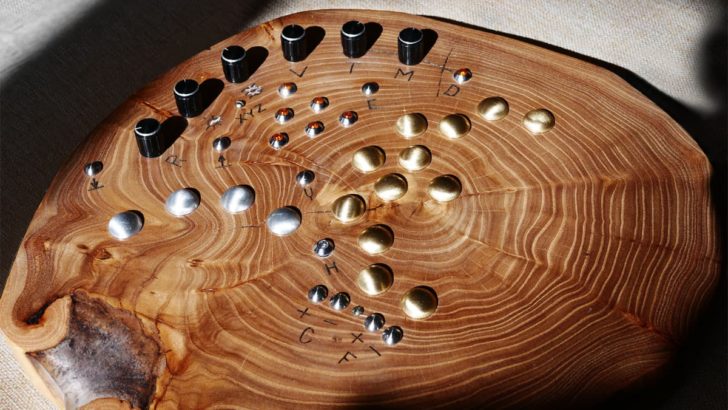
Host Ziv Eliraz, in his latest loopop video, takes his usual in-depth look at the new SOMA Terra, a unique synthesizer that SOMA describes as “a highly conceptual device”.

Behind the extremely simple interface hides a complex polyphonic, microtonal synthesizer, with a broad and flexible sound palette that ranges from classical beautiful tones to complex atonal noise, with smooth and fast transitions between these extremes.

Like other SOMA instruments, the Terra is not designed to compete with other traditional electronic instruments, but to explore new territory. Or, as Eliraz notes, “It’s not the best of a certain regular category, it’s its own category. ”

The Terra is expected to be released some time in 2023, with pricing TBA. Find out details on the SOMA Labs website. Watch the video and share your thoughts on the SOMA Terra in the comments!

Topics covered:

0:00 Intro

2:20 Note sensors

3:30 Timbre sensors

4:10 Pitch shifters

5:30 Gyro

6:15 Holds

6:40 The Triangle

7:30 Envelopes

8:00 Effects

8:35 Sea & sun

9:10 Engine controls

10:50 LFO & Arp

12:00 Presets

12:50 Connectivity

13:30 Synth params

14:00 POLYPHONIC

17:00 Evil synthesis

18:35 Church organ?

20:15 Dist. ecstasy

20:40 EXPERIMENTAL

20:50 Gyro feedback

21:00 Drum synth

21:20 FM

21:55 Rate @ 50%

22:20 BASS

22:35 Smart glides

23:10 Expressive 303

23:30 SOLO

24:25 Formants

24:45 MIDI out

26:55 Pros & cons

29:30 Outro