The world of alternate firmware for synths is moving incredibly fast, and the M-Vave FM-1 is ground zero.
There are already dozens of alternate firmware options available for the FM-1, and new ones being introduced almost daily.
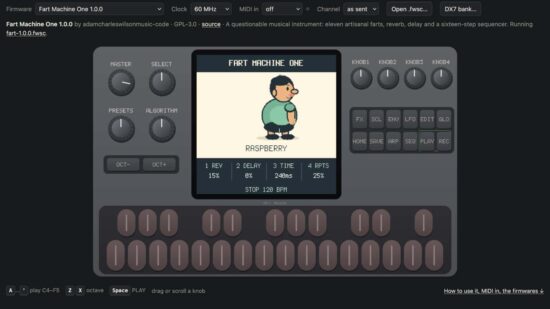
Now developer Joakim Eriksson has created a site that lets you test drive these firmware options, directly in your web browser.
The web application emulates its chip, a JieLi AC791N with two cores of JieLi’s own 32-bit pi32v2 CPU, together with the screen, keys, knobs and audio, and runs the FM-1’s firmwares on it unchanged, in WebAssembly in your browser. Because it emulates the hardware, it runs the same packages you would install on a real FM-1.
An interesting new ecosystem of open solutions is emerging around the FM-1 – where you will soon be able to preview synths online, download them to cheap hardware or run them as plugins in your DAW.
Will this lead to a ‘free synth nirvana’ – or an endless stream of low-quality synths? Share your thoughts in the comments!
The world of alternate firmware for synths is rapidly expanding – and it’s bringing new features to synths that are still in production.
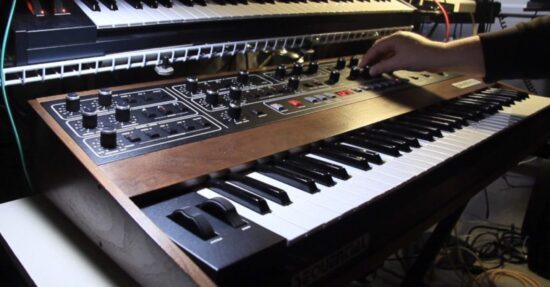
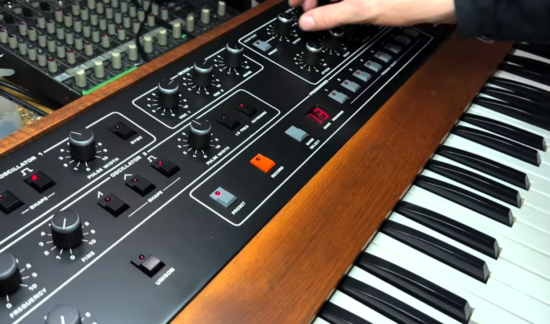
The latest example is prophet-rev4-mods, a free alternate firmware for the Sequential Prophet-5 and Prophet 10 Rev4 line that adds an arpeggiator, polyphonic step sequencer, octave shifting and patch-level sequence memory.
The project is designed to expand the Rev4’s performance capabilities without requiring hardware modifications.
Features:
Adds an arpeggiator to the Sequential Prophet-5 Rev4 and Prophet-10 Rev4 firmware.
Offers Up, Down, Up/Down, Random and Assign arpeggiator modes.
Supports arpeggiator patterns spanning one to four octaves.
Provides adjustable tempo from 40 to 300 BPM, with both knob control and tap tempo.
Supports external MIDI clock synchronization.
Offers a range of note divisions, including dotted, triplet and swing settings.
Includes a HOLD latch with re-latch behavior for changing held notes or chords.
Adds a polyphonic step sequencer with up to 512 steps.
Sequences chords of up to 10 notes, retaining the velocity of recorded notes.
Supports rests and ties, along with recording from the keyboard or MIDI input.
Provides forward, backward and pendulum playback directions.
Allows sequences to be transposed from the keyboard.
Can route a recorded chord sequence through the arpeggiator, turning it into a changing chord progression.
Adds a front-panel keyboard octave shift of plus or minus two octaves, also affecting arpeggiator operation and MIDI output.
Saves arpeggiator settings and recorded sequences with user programs.
Uses existing front-panel controls rather than adding external controllers or modifying the hardware.
Can be bypassed at startup, allowing the synthesizer to operate with its standard behavior when the patch is inactive.
Applies to the official Main OS 2.1.0 file through a browser-based patcher and installs using the standard SysEx update process.
The prophet-rev4-mods project is available free of charge from GitHub under the MIT license. Users need Sequential’s official Main OS 2.1.0 firmware file and a MIDI SysEx transfer utility to create and install the patched firmware. The repository provides installation instructions and a method for restoring the original official firmware.
The project is not affiliated with Sequential. The author reports testing the modification on a Prophet-10 Rev4 in October 2026, while the Prophet-5 Rev4 remains untested on hardware. Users should review the repository’s documentation, risks and recovery requirements before installing the patch.
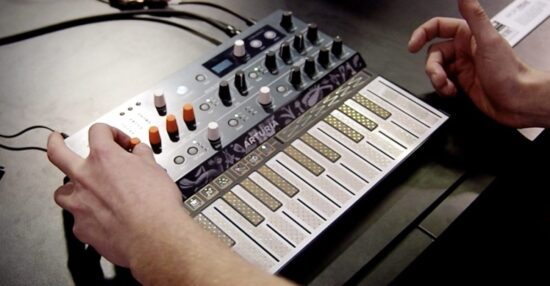
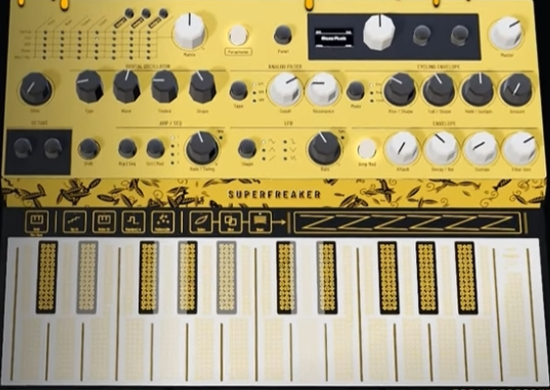
Freakier Firmware has announced Superfreaker – unofficial alternate firmware for the Arturia Microfreak synthesizer that adds new effects, performance features and more.
Superfreaker – now in beta – promises to add Drive, Lo-Fi, a tape echo, a separate Release, Legato Glide, a metronome, transpose, Shift latch and more.