WAVS Launches ‘Industry First’ AI-powered Sample Discovery Tool, AI Sample Finder
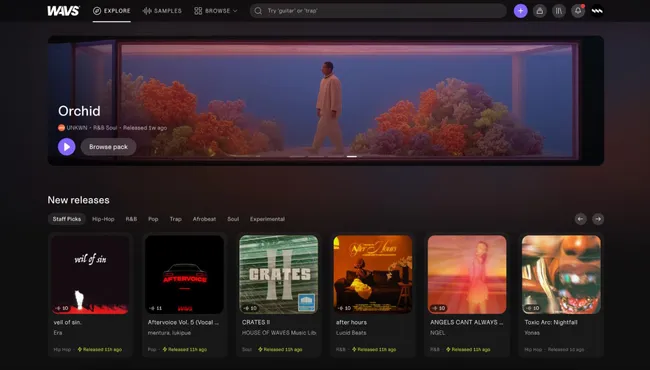

WAVS has launched AI Sample Finder, an AI-powered sample discovery tool that enables users to search for samples from its library that are similar to an uploaded audio file.

The AI Sample Finder can be accessed via WAVS’ browser-based platform and its VST/AU plugin, so music-makers can drag-and-drop any sample from their timeline into the plugin to search for similar sounds without leaving the DAW and breaking their creative flow.

WAVS promises that AI Sample Finder will empower creators to “explore and experiment with samples in innovative new ways”, searching for stems, loops and one-shots that align sonically with an existing project and discovering sounds that resemble their favourite samples and synth patches.

Other uses for AI Sample Finder suggested by WAVS include uploading a portion of a reference track to find samples that sound like a particular artist, or even recovering lost samples from corrupted projects by dropping an early bounce into WAVS to find the original sounds that were used.

Alongside the AI Sample Finder feature, WAVS’ library can also be searched and filtered based on categories such as mood, energy, genre and instrumentation. The WAVS plugin syncs up with your DAW project to allow you to quickly and easily audition sounds in the appropriate key and tempo before dropping them into a track.

WAVS is a sample marketplace with an extensive library of over 100,000 sounds, almost half of which are royalty-free. The remainder can be used according to a unique royalty structure whereby sample clearance is only required after a track that uses a sample reaches 1m streams or is released via a major record label.

WAVS is describing AI Sample Finder as an “industry first”, and while this type of AI-based sample discovery isn’t entirely new, WAVS’ implementation of the technology is a little different to its competitors.

Loopcloud offers an AI-powered similarity search via its Loopcloud Sounds plugin that digs out sounds from its own library that are similar to a chosen sample from the user’s library, but this requires the sample to be loaded into Loopcloud’s desktop app before it can be accessed in the plugin – there’s currently no drag-and-drop function available.

Splice’s Search with Sound feature, currently in beta, also allows users to upload their own audio to assist with discovering samples from its library, but instead of identifying similar sounds, Splice’s feature searches for compatible sounds that could be layered into to a project to complement the given sample, based on analysis of its rhythm and tonality.

WAVS is a credit-based subscription service starting at $8.99/month for the Starter tier, $13.99/month for the Pro tier and $19.99/month for the Elite tier. The WAVS plugin is compatible with macOS and Windows and available in VST/AU formats.

Find out more on WAVS website.
 

Ableton Updates Move & Note, Users Can Access The Full Version Of Ableton Live Drift Synth Now


Hot on the heels of yesterday’s unveiling of Live 12.3, Ableton has released updates for its Note iOS app and Move hardware. While there are a few differences between these two updates, they share one key headline feature – adding full, unabridged access to Live’s stock synth Drift.

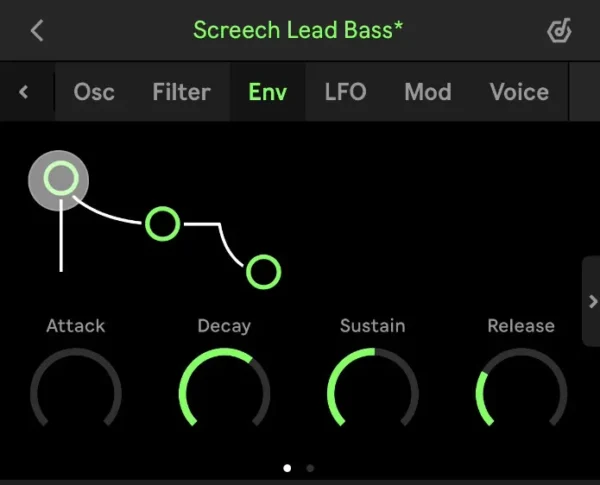
Now, for the first time, Note and Move users have full access to one of Live’s synths complete with every parameter available in the DAW version and the ability to craft patches from an initialised state.

Despite their visual differences, Move and Note share a lot of fundamental similarities. Note, which launched in 2022, brings a stripped-back version of the Live workflow to iOS devices, allowing users to play and sequence MIDI clips as well as sample and sequence audio, plus manipulate sounds with a limited selection of Live’s stock effects.

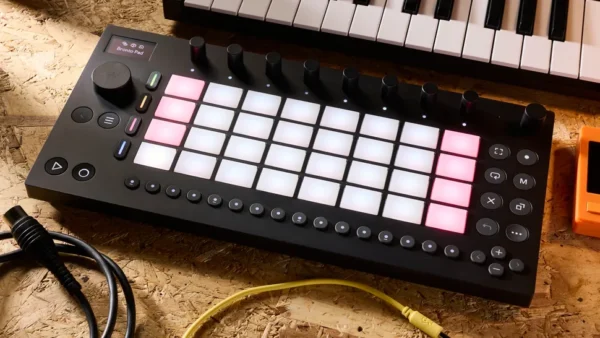
Move is a standalone hardware device designed as an on-the-go sketchpad companion to Live, although under-the-hood it essentially runs a variation on the Note app.

Both formats control instruments and effects via a bank of eight parameter controls, which are adjusted via the touchscreen in the case of Note and using a bank of eight touch-sensitive rotaries on the Move hardware.

In each case, in order to control Drift, these controls can cycle through multiple banks of parameters for adjusting the synth’s oscillators, filters and modulation tools, along with a top-level bank of macros.

The key difference between the rollout of Drift across the two platforms is that, while it comes to Move as a free firmware update, access to the full version of Drift in Note requires an in-app purchase, although this is fairly reasonably priced at $6.99.

In either case, having access to the full range of Drift parameters is an excellent addition. As Live users will likely already know, Drift is a fantastic-sounding, wonderfully versatile analogue-style synth capable of creating both faux-vintage tones and modern timbres. Particularly when combined with Move’s expressive pads, it can create some highly dynamic and vibrant synth patches.

The Note update is out now, and also adds an assortment of bug fixes and minor workflow refinements (all of which are free, and don’t require the purchase of Drift).

Move’s latest firmware update, v1.7, is available today via public beta. Along with the upgrade to Drift, the update also introduces the ability to adjust the brightness of the Move hardware, and adds a pair of new acoustic drum racks.

The update follows hot on the heels of other recent Move updates. Version 1.5, which arrived earlier this summer, significantly improved the device’s MIDI capabilities and added much-requested sample-slicing capabilities. V1.6, which left the beta stage just yesterday, introduced the ability to reverse samples in Drum Racks.

The Note app is available from Apple’s App Store priced at $/£6.99. Move is available now priced at $499 also on Amazon site. Find out more about Note on the Ableton site, and join the Move public beta here.

New Documentary – Roger Linn: The King of Drum Machines


Videographer Jack Pearson shared this mini-documentary, Roger Linn: The King of Drum Machines.

This is the story of Roger Linn, a guitarist and songwriter from Los Angeles who created the modern drum machine and changed the sound of modern music.

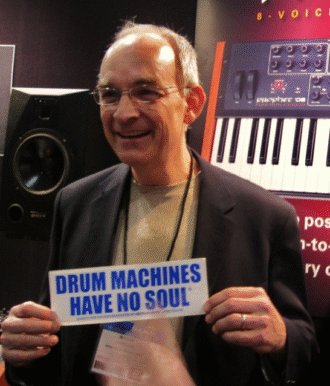
Roger Linn has changed the sound of music with instruments like the LinnDrum and the MPC, but also has a humble and humorous take on his impact.

Video Summary:

“I first learned about Roger a few years ago while making a film called “The History of Sampling in Music”.

While I didn’t know anything about Roger at the time, I was astounded to learn that he had created both the LinnDrum and the MPC, which shaped the punchy robotic drums of 80s pop music and the grungy experimental grooves of 90s hip-hop respectively. I did a quick bit of research about him for my video, but didn’t really dig much deeper than that…

However, a few months ago I decided to rewatch my old project, which reignited my interest in Roger’s story and gave me the idea for this video.

Like my previous project, I’d initially planned to write a script and do a voice-over, but after discovering the assortment of recorded interviews that Roger has already appeared in, I realized that I could just chop them up and have Roger tell his own story. I thought “hey that sounds pretty cool, how hard could it be?”

Well, let’s just say I’m probably never going to do something like this again. I did enjoy making this and I am proud of it, but if I had just done a voice-over not only would it have been easier to make, but I also could’ve included a lot information without it feeling incredibly clunky. The initial cut was about 26 minutes, but I cut out loads of stuff for the sake of pacing and trying to stick to narrative beats.

Roger is a fascinating guy with a lot of great anecdotes though, so if you enjoyed this video then I highly recommend you seek out some of the podcasts/interviews he’s done over the years.”

Note: The nickname “The King of Drum Machines” comes from Dave Smith, and a panel discussion at Sweetwater’s Gearfest 2015.