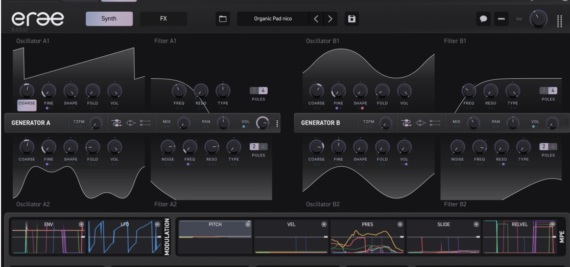
Today, Embodme has introduced ERAE Sound, a new software synthesizer that they describe as “The first synthesizer designed for an expressive surface. Not adapted — built from scratch.”
ERAE Sound features 83 instruments, each designed to offer its own ‘feel’ and way of being played.
Here’s a demo of a variety of the sounds:
While ERAE Sound is optimized for the ERAE Touch, it’s compatible with any MPE controller, and works with all major DAWs — Ableton Live, Logic Pro, Bitwig and more.
*Note: Full MPE expression (slide, pressure, release velocity) requires an MPE-compatible DAW. It works as a standard instrument in non-MPE DAWs.
ERAE Sound is available now for €79 / $89 USD / £69 GBP.
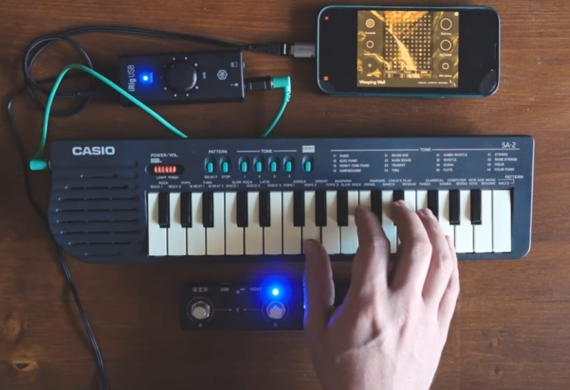
In this video, Budapest-based synthesist vekoni demonstrates why you should be limited by your gear – creating an ambient orchestral composition using just a 40 year-old Casio SA-2 keyboard and an iPhone running some effects plugins.
The performance makes creative use of effects to radically transform the SA-2 sound, using Quinta Pitch Machine to transpose the original sound, Rymdigare to create movement, Weeping Wall to create loops and more.
Here’s what vekoni shared about the technical details:
The SA-2 has a violin and piano sound that works surprisingly well as an orchestral base — the rest is just finding the right effects to build on top of it.
Nembrini’s Quinta Pitch Machine sits first in the AUM chain but starts disengaged. As the piece progresses I switch between a low pitch setting for a fuller bass sound and a high pitch setting for melodic moments — both assigned to buttons on the Mvave Chocolate MIDI controller. Rymdigare follows – part reverb, part drone machine, with swelling tails and internal feedback that adds a lot of movement to the signal. Then Weeping Wall in macro loop mode — loops up to 60 seconds that slowly fade away, stacking layers that dissolve before they outstay their welcome. Eventide Blackhole at the end for the final wash of space.
Signal chain:
→ Casio SA-2 (modded with an output jack)
→ 3.5mm TS to 6.35mm cable
→ IK Multimedia iRig USB audio interface
→ iPhone — AUM as host
Inside AUM (in order):
Nembrini Quinta Pitch Machine (2 nodes set up to low and high pitch)
Rymdigare
Weeping Wall
Eventide Blackhole Reverb
Watch the video and share your thoughts in the comments!
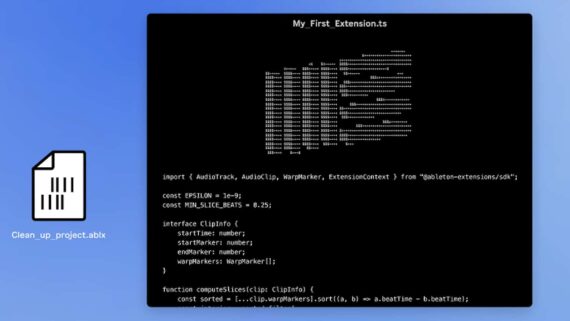
Today, Ableton has introduced the Extensions SDK, described as “an experimental playground inside Live Suite”.
The Extensions Software Development Kit (SDK), now in public beta, is an open JavaScript toolkit that lets you create custom tools that expand what you can do in Live Suite.
Extensions are optional add-ons that run alongside Live and can be accessed with a right-click from anywhere in your Set. They can read and edit the structure of your Set – including tracks, clips, parameters, automation and more. Using the Extensions SDK, you can create tools that analyze, visualize, and reorganize your Live projects, automate repetitive parts of your process, connect Live to entirely new services and more.
The SDK is based on JavaScript, so it’s designed to be easy to get started, especially for people with previous experience with Web development.
Anyone can create Extensions under the Ableton SDK license. Live 12 Suite users can join the beta program and download the Live 12.4.5 beta to get started. See the intro video, embedded above, for a overview of developing your first Extension.
The Ableton Extensions SDK is available now as a free download.