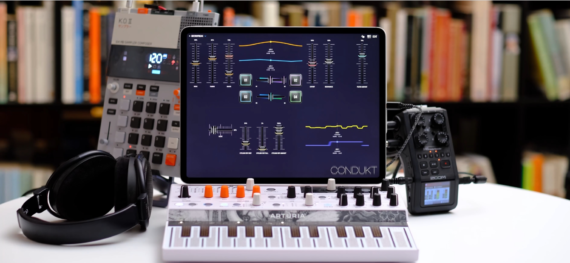
Condukt is a new ‘Universal MIDI controller’ for iOS, iPadOS and macOS.
The app features a database of 200+ synths, samplers and drum machines, and turns your device into a hands-on interface for your hardware synthesizers.
It adds more knobs and faders, new options for modulations, and even several types of sequencers.
The developer has shared examples of Condukt in action, with dozens of different synths, on their Youtube channel.
Condukt is available now in the App Store for $9.99 USD.
In the midst of a good number of other product announcements, Apple this week has unveiled the MacBook Neo, their most affordable laptop ever that’s designed to compete with Chromebooks and cheap Windows machines and provide “the magic of the Mac at a breakthrough price”.
Prices at $599 and there are four colour options: Silver, Indigo, Blush and Citrus. We expect the MacBook Neo to be the most consequential computer that Apple has release since the original iMac, more than 25 years ago. You can pre-order now. Available starting 3/11.
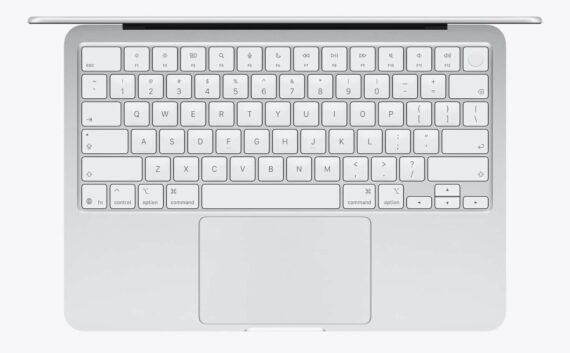
At first glance, the most impressive thing about the MacBook Neo (aside from the low price) is that it doesn’t look like a budget laptop. It has an aluminium (as opposed to plastic) enclosure that should ensure that it feels like a ‘proper’ Apple product. However, rather than using one of the ‘M’ processors that you’ll find in all of the company’s other Macs, the Neo is being equipped with the A18 Pro, which made its debut in the iPhone 16 Pro in 2024.
The MacBook Neo Is First And Foremost, A MacBook For The Masses
The MacBook Neo may look like a stripped-down laptop to power-user content creators working with top-of-the-line machines.
But to the general public, the MacBook Neo is a $600 computer that not only doesn’t suck, but looks, feels and acts like a premium Mac computer.
While some will inevitably use this as a stick to beat Apple with (‘it’s just a phone in a laptop case,’ etc) and say that it should have used the M1 processor at least, there are already suggestions that the more modern and efficient A18 Pro could be at least on a par with that chip, which dates from 2020, and offer better performance in some areas.
What’s more, in comparison to the M1 MacBook Air, which the Neo is already being likened to, the new machine has some advantages. Battery life should be a bit better, the front-facing camera is slightly improved (1080p as opposed to 720p) and more modern WiFi and Bluetooth standards are supported.
On the connectivity side, musicians will definitely appreciate the 3.5mm headphone jack, but there are just two USB-C ports, neither of which has Thunderbolt capabilities (one is USB 3 and the other USB 2).
Windows Central says that “Microsoft better be panicking”. They say that PC makers have been shipping “what can essentially be described as e-waste in this price bracket, with a few exceptions.” Ouch.
They add that – unlike cheap Chromebooks and PCs – the MacBook Neo is well-built, stylish and ‘everything your everyday Joe or Jane would ever need from a computer in 2026.’
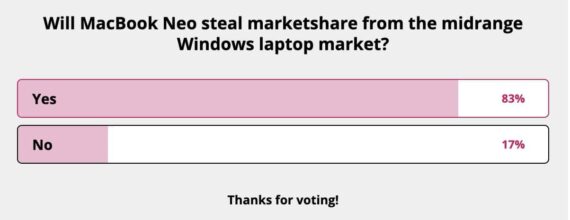
And when they asked their readers – an audience of Windows power-users – what they thought of the Neo, 83% said that it will steal marketshare from Windows:
The influential tech site Tom’s Guide, agrees, saying that “It’s game over for cheap Windows laptops.”
Most importantly, Marques Brownlee – who’s probably now the most important pundit in computer tech – says that that the MacBook Neo is an affordable laptop that’s ‘actually good’, and that this wouldn’t have been possible if Apple had stuck with ‘Intel Inside’:
In order to hit the low price point, though, Apple has scrimped in a few areas. RAM is locked at 8GB (there’s no option to upgrade this – either at the point of purchase or later on) and the base model has just 256GB of storage. There’s also a 512GB model, which adds Touch ID, too, and will set you back another $/£100, but there’s no option to have a backlit keyboard on either model.
So, Why Does This Matter For Musicians?
The reason that Apple’s computer line is now so competitive is that the iPhone is the most successful consumer electronics product in history. Apple has sold over 3 billion iPhones, which means that they manufacture processors at a scale that dwarfs anything in the world of traditional computers.
This led to Apple Silicon, which freed Apple from the stagnation that ‘Intel Inside’ had forced on them. As a result, Apple Silicon Macs now offer a balance of performance and battery life that’s become a major selling point for their MacBook line.
The MacBook Neo promises to be a real, mass-market computer. Apple currently has about 9-10% of the laptop market. Based on the Neo’s reception in the Windows world, it looks like it could double that market share within a few years.
Apple has captured about 23% of the global sales of smartphones, and they dominate the most profitable slice of the market. That means that they reap about 85% of the profits, worldwide, of smartphone sales.
The MacBook Neo is positioned to do the same thing in the world of laptops. This will be extremely consequential for the world of computing, and is going to be an important trend for musicians, too.
Apple already has a dominant role in music. About 70% of professional musicians use macOS. If you’re reading this, chances are pretty good that you’re doing it on a Mac.
The MacBook Neo is going to carve out the most profitable part of the mid-tier market for laptops, dramatically expanding the number of people using Macs, and becoming the entry-level computer for many musicians.
The MacBook Neo comes with GarageBand and iMovie installed, too. This means that – for as little as $499 – more musicians are going to get a more powerful system for making music than ever before.
macOS is already the primary platform for music application developers. The MacBook Neo is going to solidify this lead. This means that Mac users are going to have access to more music applications and more peripherals than Window users. And, it’s going to accelerate the trend of multi-device music making, where you might capture a quick idea on your iPhone, develop it on the couch using an iPad, and finalize it using a Mac.
Reading The Tea Leaves
Predicting the future is always risky – so let us know what your thoughts are on the MacBook Neo. Are we ‘reading the tea leaves’ correctly? Is the Neo really the most consequential computer since the iMac? Let us know in the comments!
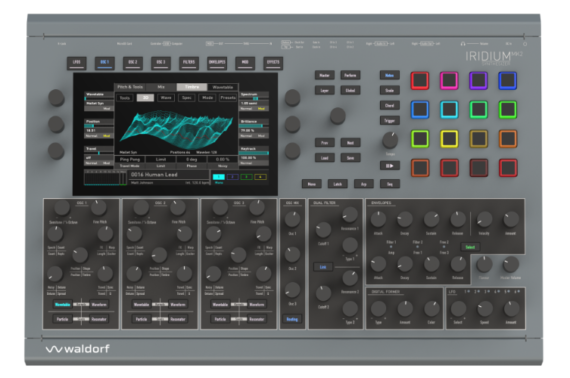
Waldorf has officially introduced the Iridium Desktop MK2, a new generation that features a new design, an improved CPU board with more RAM and flash storage, and feature created in collaboration with Aphex Twin, Per-Note-Parameter-Locks.
Here’s what’s new in the Waldorf Iridium MK2:
More Memory, Layers & Sound
With the increased memory capacity, you can change the multi-timbral layer count from 2 to 4. In addition to layered and split modes, the new MK2 also features more advanced multi-timbral modes, such as round-robin and random-robin.
Per-Note-Parameter-Locks
The Iridium MK2 features Per-Note-Parameter-Locks, a feature created in collaboration with Aphex Twin
The Iridium MK2 features Per-Note-Parameter-Locks, a feature created in collaboration with Aphex Twin (Richard D. James), a long-term Iridium Desktop user.
With this feature, each of the 128 notes can be assigned up to 16 individual parameter variations, by simply holding a note and turning knobs.
This system allows each note to have a different set of parameters. You can even change the synthesis mode of oscillators for each note or change effect parameters.
Per-Note-Parameter-Locks are saved with each patch and can be inspected and edited on a dedicated page.
Seeds – The Sixth Synthesis Sense
The added RAM also allows a new sixth synthesis method for each of the three oscillators.
Inspired by wavetable synthesis, Waldorf has found a way to dynamically synthesize waypoints from sub-oscillators, called “Seeds”. These can be controlled and recombined using techniques like ring modulation and frequency modulation, and enriched with noise and other non-pitched material.
Protein’s “Flavour” Knob
The new knob called “Flavour” adds sonic liveliness using our new concept of micro-variations in timing, timbre, pitch, and a whole set of additional parameters, introduced with the Protein synthesizer.
The Waldorf Iridium mk2 is priced at € 2,399.00 but is currently listed as out of stock.