Apple Music Launches Transparency Tags For AI-generated Music

Apple Music is introducing a new initiative that it hopes will provide greater transparency regarding AI-generated music.
The platform has launched what it is calling Transparency Tags — a system of disclosure labels that record labels and music distributors can begin applying to content delivered to Apple Music immediately, and will be required to use when delivering new content in future.
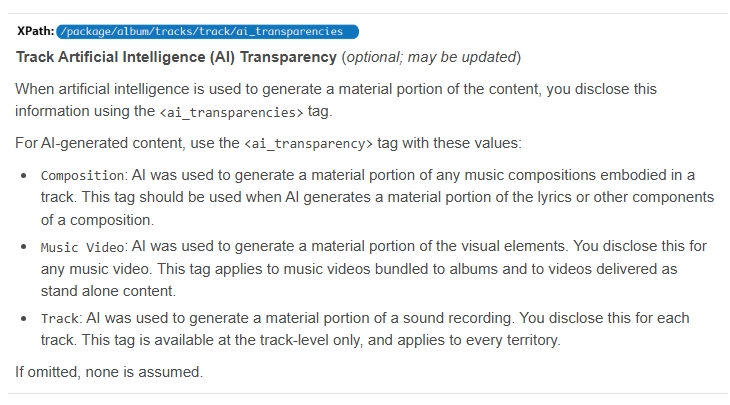
The tags cover four main elements: artwork, track, composition, and music video.
The artwork tag, applied at the album level, flags when AI has been used to generate a material portion of static or motion graphic artwork.
The track tag is used when AI generates a material portion of a sound recording, and the composition tag covers any AI-generated lyrics. As you’d expect, the music video one covers any visual content. Labels and distributors can use multiple labels on the same track.
In a newsletter announcing the changes, Apple said that “similar to genres, credits, and other metadata,” it will defer to the actual providers to determine what qualifies as AI-generated content.
“Proper tagging of content is the first step in giving the music industry the data and tools needed to develop thoughtful policies around AI,” they state, “and we believe labels and distributors must take an active role in reporting when the content they deliver is created using AI.”
You might well say, what’s to stop nefarious individuals from just, er, not bothering to put any tags on? This rather looks like self-policing. Not a system that’s worked very well, whether that’s regulating financial markets or the water industry.
Apple said that they hoped the tagging requirements provide: “a concrete first step toward the transparency necessary for the industry to establish best practices and policies that work for everyone.”
The scale of the problem of AI slop seems to grow with every passing month. Deezer revealed in January that it was receiving 60,000 new fully-generated AI tracks, a day. That’s compared with just 10,000 in January 2025.
At the end of last year, the platform reported that 85% of those were fraudulent. “We know that the majority of AI-music is uploaded to Deezer with the purpose of committing fraud, and we continue to take action,” said Alexis Lanternier, CEO of Deezer.
The Paris-based platform has been building its own AI detection software over the past year and claims to have detected and tagged 13.4 million AI tracks in total. Deezer has also started to license its detection technology to other platforms, including the French collecting society SACEM.
By contrast, Apple’s approach suggests a company that is still in denial about the scale of AI fraud worldwide.
Apple’s transparency tag system does not include any visible enforcement mechanism or cross-verification process, and the technical specification, which you can see here, and below, describes the tags as optional for now, noting that if omitted, none is assumed.