Archive for January, 2026

Exploring Touché, Don Buchla’s Rare Polyphonic Keyboard Instrument


Electronic musician Sarah Belle Reid shared a new video, exploring an extremely rare electronic instrument called the Touché, created by Buchla and Associates in 1980.

Filmed at the Buchla Archives in Vancouver – an organization dedicated to the preservation of Donald Buchla’s work – the video offers a rare opportunity to hear and see an instrument that very few people have ever encountered firsthand.
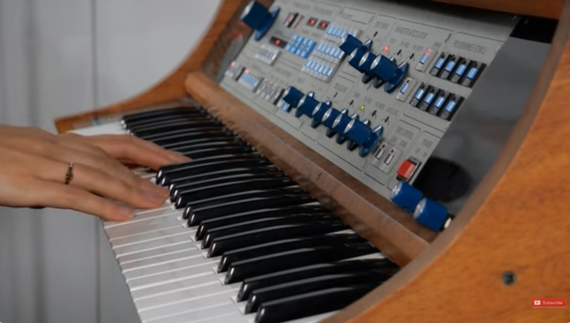
Reid’s video begins with an overview of how the Touché grew out of Buchla’s earlier computer-controlled instruments of the 1970s, including the 300 Series systems. From there, the video offers a detailed walkthrough of Touché’s sound architecture, including many musical demos.

In the following video, below, Reid shares a short live performance with the Touché.

About The Buchla Touché

Only around five Touché are known to have been built, and very few remain functional today. Because of this, the instrument has remained largely absent from both public performance and documentation. Reid’s video helps bridge that gap by sharing the Touché’s sound, design, and historical context with a wider audience.

While Don Buchla is best known for his modular synthesizers such as the 100 and 200 Series, he also created a number of non-modular, computer-based instruments like the Touché that explored new relationships between performance, software, and sound.

The Touché was conceived by Don Buchla in collaboration with composer David Rosenboom. It is a bi-timbral, eight-voice polyphonic keyboard instrument that combines digital sound generation, analog processing, and computer-mediated control.
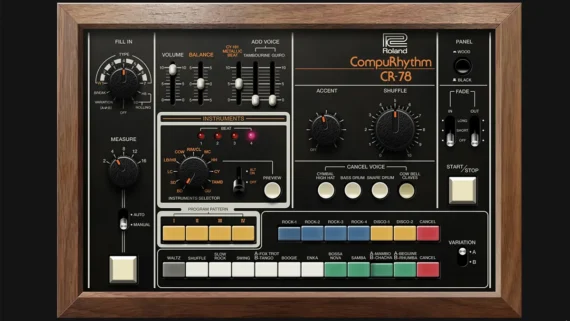
 

Roland CR-78 Software Rhythm Composer Brings The Sound Of ‘In The Air Tonight’ To Your DAW


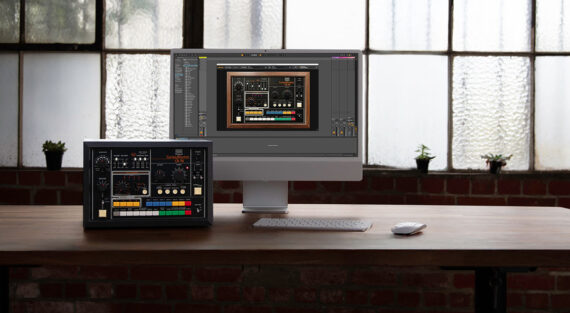
Ahead of the 2026 NAMM Show, being held Jan 22–24 in Anaheim, California, Roland has introduced the CR-78 Software Rhythm Composer, a plugin emulation of their CR-78 drum machine.

Released in 1980, the CR-78 was what Roland calls “the world’s first computer-controlled programmable drum machine”. It was a transitional device, halfway between pre-programmed organ-top beatboxes and pioneering drum machines like the TR-808 and TR-909.

The machine itself may have had a relatively low profile, but its sound became well-known thanks to the CR-78’s use on hits such as I Can’t Go For That (Hall & Oates), Vienna (Ultravox) and, most notably, Phil Collins’ In The Air Tonight.

Now the CR-78 has become the latest instrument from the Roland archives to join the company’s plugin roster, which is available via the Roland Cloud. And not only is it designed to bring the sound of the original hardware to your DAW, but it’s also been enhanced with modern sequencing features, individual sound mixing and tuning, tempo sync, drag-and-drop audio/MIDI support and various other things.

As you’d expect, Roland has gone for an interface that closely resembles the original hardware – you can choose between the wood panel and black vinyl covering variations – and there are direct access controls for rhythm patterns, instrument sounds, shuffle, fills, volume balance, fade-in/fade-out, and more.

Roland CR-78 Software Rhythm Composer Audio Demos:

There’s also a detailed Pattern view where you can fine-tune your rhythms and sounds, and mixer controls can be found on the Kit screen.

If you have a Roland Cloud Ultimate membership, you’ll have access to the CR-78 already, and the Lifetime Key is currently on sale for $49 (regular price $199). It runs on PC and Mac in VST/AU/AAX formats.

Find out more on the Roland website.


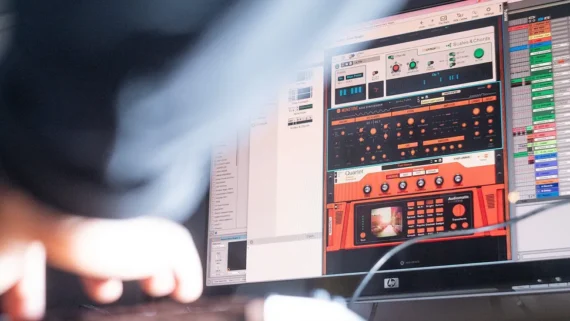
Reason Studios Announces New Pricing For Reason Rack & DAW


The Reason Rack plugin is now available as a standalone purchase or subscription, and there’s also a price drop for Reason.

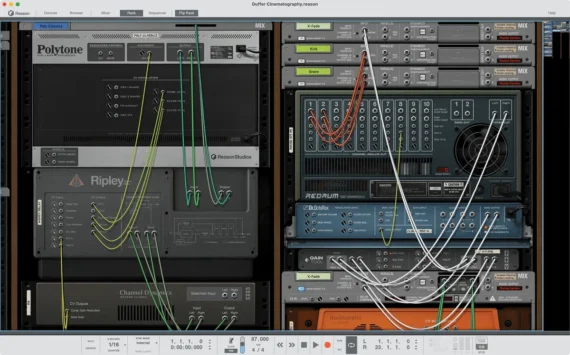
Modelled on a real-world rack of studio hardware, the Rack is where users load and edit instruments and effects, routing devices through the use of virtual patch cables.

Reason Studios has announced new purchase and licensing options for Reason DAW and Reason Rack.

Earlier this month, it was announced that Reason Studios had been acquired by AI mastering specialist LANDR. It seems the new owner is wasting no time in making a few changes.

Those devices include more than 30 virtual instruments, including highlights such as the Objekt modelling synth, Polytone virtual analogue and Mimic sampler. The rest of the list is made up of effects, MIDI sequencers and generators, and utilities. In all it’s a comprehensive line-up.

  • Reason Rack is now available on its own for $199 as a plugin for creators that already have a preferred DAW and just want more affordable access to Reason’s 66 instruments, effects, and modular workflow. Users can also now subscribe to the Reason Rack on its own, priced at £/$99 per-year or £/$11.99 per-month.
  • Reason DAW is now available at a lower price of $299 (down from $499).

The company says those that want to go ‘all-in’ can subscribe to Reason+, which includes access to the full DAW, plus extras including a plugin bundle, unlimited distribution via LANDR, unlimited stem separation and unlimited AI mastering.

“Artists have been clear about wanting more flexibility, features and value,” said LANDR CEO Pascal Pilon. “These changes are designed to deliver on those needs while preserving the creative workflow that makes Reason unique.”

Reason+ is priced at £/$169 per-year or £/$19.99 per-month.

Visit the Reason Studios site for more info.