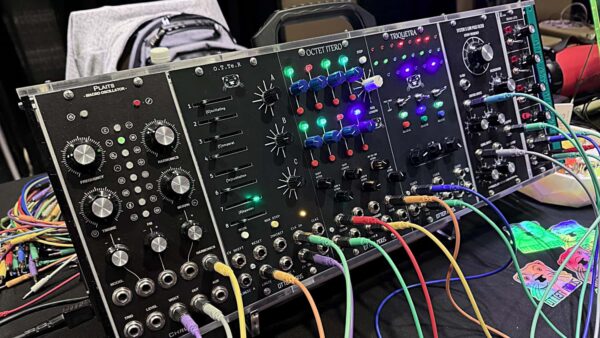
At Knobcon 2025, held Sept 5-7 in the Chicagoland area, Otter Mods introduced three new modules, which they plan to make available in both Moog and Eurorack modular synth formats.
The modules include:
The O.T.Te.R Oscillating Temporal Tesselation Repeater is a unique and versatile pattern generator style sequencer.
The Triquetra is a triple shift register module that produces syncopated gates and stepped CV output. Each register can be clocked and looped independently.
The Octet Itero is a traditional 8-step sequencer that can mute individual steps, adjust sequence length, and has multiple CV outputs.
Here’s a video overview of the modules from developer Elton Glover, via CatSynth TV:
The modules are available now in Eurorack format with the following pricing:
The O.T.Te.R – $300.00
Triquetra – $300.00
Octet Itero – $300.00
Glover told us that he expects to have the MU versions available within a few months.
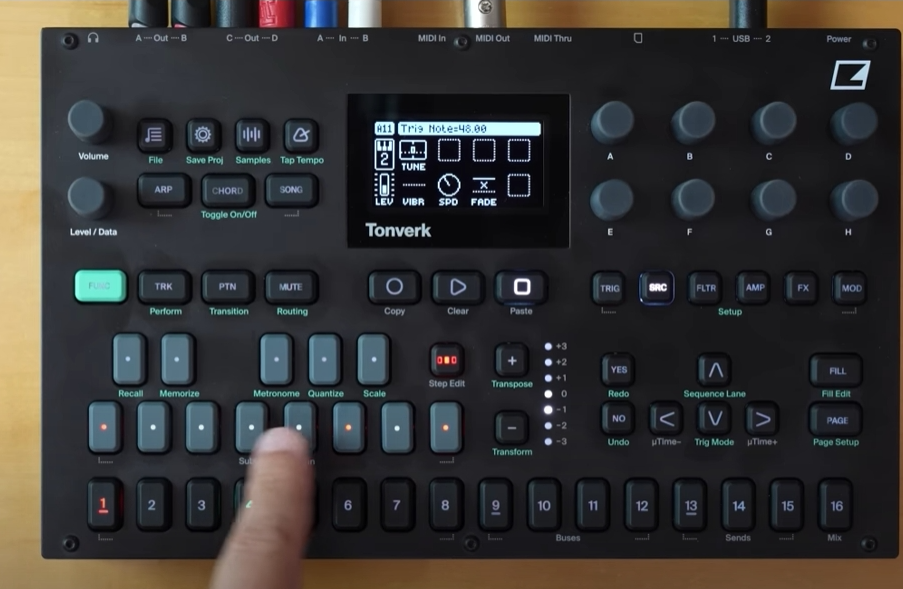
Host Ziv Eliraz – in his latest loopop video – shares a hands-on review new Elektron Tonverk, a polyphonic multisampler and audio processor.
As ever, Eliraz first offers a comprehensive introduction to the instrument, showcases the instrument’s unique capabilities and offers some musical examples of its capabilities.
Topics covered:
0:00 Intro
1:45 Overview
2:50 Polyphony
3:35 Multi player
5:15 Memory
6:15 FX & sends
7:30 FX & buses
8:45 Routing
9:40 I/O
12:00 Panel tour
14:00 MIDI on buses
14:40 Presets
15:20 Projects
15:50 Pages
16:40 Single player
19:10 USB sampling
20:40 Multisampling
25:20 Sub trakcs
28:00 Super track
30:25 Effects
36:40 Send FX
38:35 Sequencing
39:25 Step edit
41:30 Seq lane
43:00 Transform
43:40 Mutes
44:20 Transpose
45:10 Chain & song
45:55 Recall/perform
46:50 Arp
47:40 Scales & chord
48:20 Setup
49:05 Pros & cons
53:55 Factory patterns
Watch the review, and share your thoughts on the Elektron Tonverk in the comments!
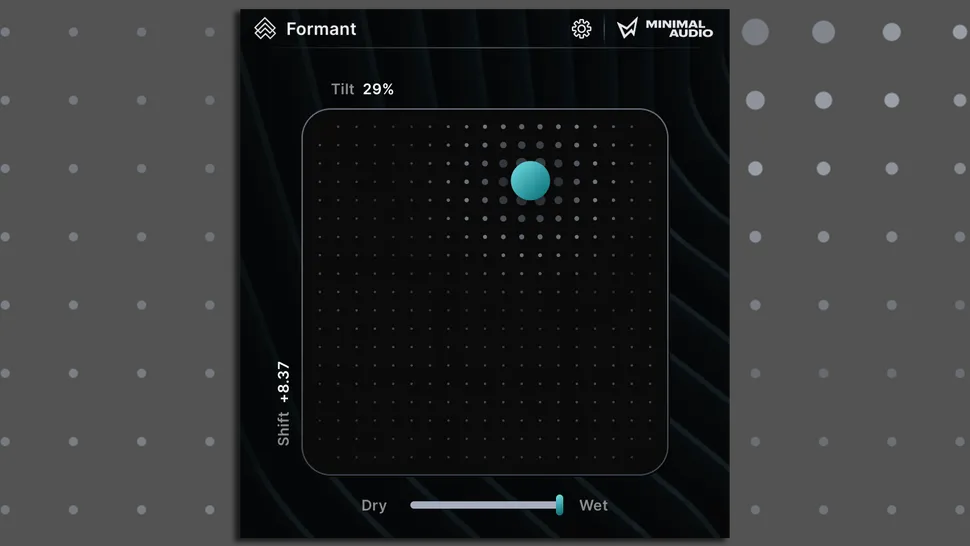
Minimal Audio has announced the release of a new free formant-shifting plugin, fittingly – but perhaps a little unimaginatively – named Formant. Promising “real-time formant-shifting with musical, transparent results”, Formant is a fast and simple tool for experimenting with different vocal characters in your productions.
A lightweight and stripped-back plugin with a basic XY pad interface, Formant is equipped with a built-in tilt EQ for brightening or darkening the tonal balance of the sound. Both this and the formant-shift can be controlled via the XY pad, and there’s a Mix slider underneath for adjusting the balance between wet and dry signals.
The Minimal Audio team tell us they’d like to offer music creators an “accessible introduction” to their take on vocal processing with Formant, and are currently working on an advanced vocal production plugin named Evoke, due out later this year. This isn’t the company’s first free plugin release: they’ve previously given away Rift Filter Lite and Squash, an OTT-style compressor.
So how exactly does formant-shifting work? The technique is best explained in terms of the human voice. A typical vocal signal, like all signals with an inherent musical pitch, comprises a fundamental frequency – the root pitch – and mathematically-related harmonic overtones.
Regular pitch-shifting will transpose the fundamental and related harmonics up and/or down while maintaining their relationship, resulting in an obvious transposition of musical key. Need to tune a C vocal up to a C#? Then pitch-shift it up by one semitone – easy.
A vocal’s formants, on the other hand, are its inherent spectral frequencies – unrelated to pitch – created by that specific vocalist’s vocal tract, mouth shape and other resonant characteristics. It’s why, for example, one singer singing at C3 will sound completely different to another vocalist singing the exact same note. In broader terminology, we usually refer to this as ‘timbre’.
The process of formant shifting, then, allows you to manipulate these formants (and therefore timbre) while maintaining pitch. At subtler values, this can be used to gently shift a vocal performance’s timbre up or down, while more extreme changes are often perceived as ‘gender alteration’ – think extreme, chipmunk-style shifts or house-style deepening effects.
And though we’re using the human voice to illustrate, all audio signals contain unique formant frequencies, making formant processing a useful tool for altering the timbre of any instrument.
Minimal Audio Formant is available now for macOS and Windows in VST/VST3/AU/AAX formats. Find out more and download the plugin over at Minimal Audio website.