Archive for August, 2025

Spitfire Audio Château Piano Captures The Sound Of The Historic Strawberry Studios


Spitfire Audio’s latest instrument captures the sound of the historic Strawberry Studios.

‘This isn’t just a piano, it’s the 1901 Steinway B heard across albums from Elton John, David Bowie, and Fleetwood Mac’.

Many of software developers have claimed to capture the character of a historic studio in plugin form, from Waves’ Abbey Road Collection to Universal Audio’s Sound City Studios and Ocean Way Studios plugins.

The latest studio to have its magic distilled in software is the storied Strawberry Studios, a legendary recording space housed in Le Château d’Hérouville, an 18th-century château located in rural France. Spitfire Audio’s latest instrument, Château Piano, samples a 1901 Steinway B piano from Strawberry Studios that can be heard on some of the most iconic albums of the 1970s.

The world’s first residential recording studio, Strawberry Studios opened its doors in 1962, before becoming one of the era’s most sought-after studio spaces in the following decade. Playing host to a jaw-dropping list of names that included Elton John, Pink Floyd, Fleetwood Mac, David Bowie and Iggy Pop, the studio has since been dubbed “France’s Abbey Road”.

Making up the mythology surrounding Le Château d’Hérouville are some fascinating tales: the place is rumoured to be haunted by the ghost of Frédéric Chopin, and Bowie, Tony Visconti and Brian Eno are said to have experienced a brush with the supernatural while recording Low at Strawberry Studios in 1976.

Elton John has a particularly strong connection to the Château, having recorded three of his best-loved early albums there, even naming one in its honour: Honky Château. The studio’s Steinway B grand piano can be heard on many of Elton’s most famous tunes, including Crocodile Rock, Rocket Man and Goodbye, Yellow Brick Road.

After Strawberry Studios closed in 1985, the château spent several decades in disrepair, before being purchased in 2015 by musicians and sound engineers Jean Taxis and Thierry Garacino. The pair have since restored the studio, and its Steinway B grand piano, to their former glory, and Le Château d’Hérouville reopened in 2020.
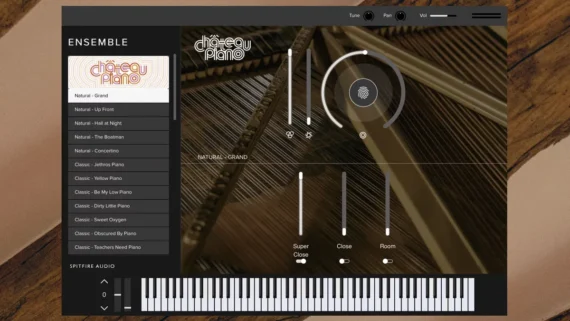
In developing Château Piano, Spitfire Audio has meticulously sampled the studio’s Steinway B in the studio’s historic “George Sand” live room with a collection of valve and condenser microphones, including a pair of vintage Neumann U67s in the same position as Elton John’s original recordings.

Eight individual signals can be blended in the plugin’s UI, recorded using multiple mic placements and effects treatments, and Château Piano features a number of onboard digital effects spanning high- and low-pass filters, chorus, flanger and reverb, alongside a selection of 37 presets.

“They all told us, if they had made this record elsewhere, it wouldn’t have been the same. They wouldn’t have written these arrangements – it was the Château that inspired them,” said studio owner Thierry Garacino in a press release. “You play three chords and straight away… that’s the sound of Elton John.”

Spitfire Audio Château Piano is compatible with macOS and Windows. Château Piano available now and priced at an introductory discount of £103/$127,

Find out more on Spitfire Audio website.
Blackstar Amplification Launches Polar Go, All-in-one Pocket-sized Stereo Recording Studio


Blackstar’s audio interface range just got a lot more portable with the pocket-sized Polar Go.

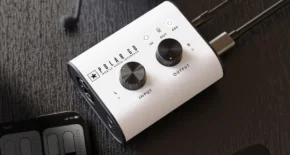
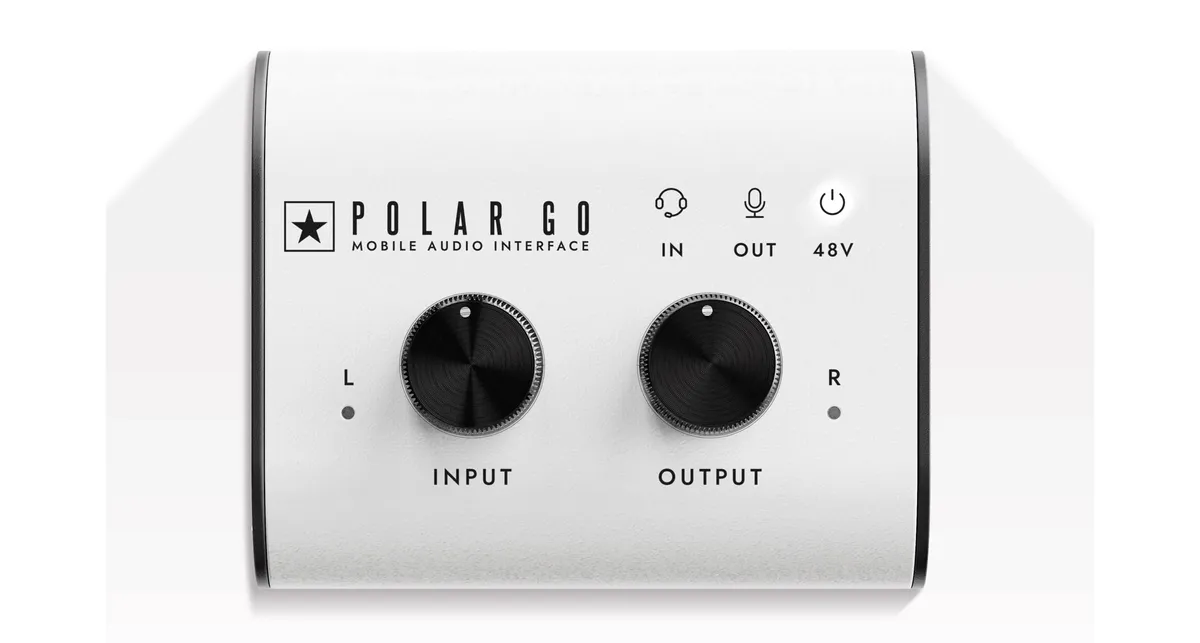
Blackstar Amplification has launched the Polar Go, an audio interface that is small enough to fit in your pocket and is designed to work seamlessly with your smartphone, tablet or laptop.

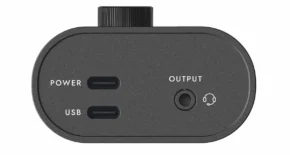
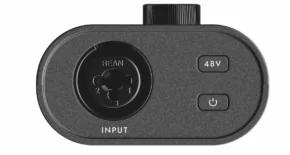
The Polar Go is equipped with Blackstar’s proprietary ProCapture Stereo Mics system, and has a combo XLR and 1/4” input, with +48V phantom power so you could hook it up with a condenser mic. There are dual USB-C outputs – one for power, one for data – and a 3.5 mm output for monitoring via studio headphones.

“Polar Go is more than a mobile interface,” says Blackstar. “It’s a complete, pocket-sized studio designed for the modern creator.”

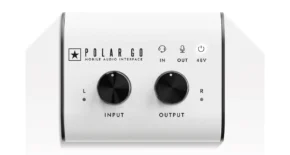
The Polar Go is a simple audio two-knob interface (for Input and Output volume) that is small enough to fit inside your pocket. And it is designed for creators of all stripes, not just guitarists.

Blackstar has made this for singer-songwriters, rappers, spoken word artists, poets, comedians, podcasters and streamers, too. It is compatible with iOS, macOS, Android, and Windows, and with all major recording apps – GarageBand, BandLab, Zoom etc.

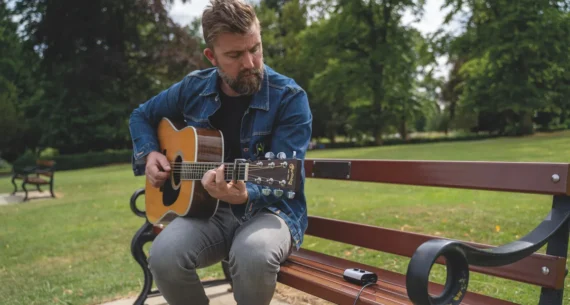
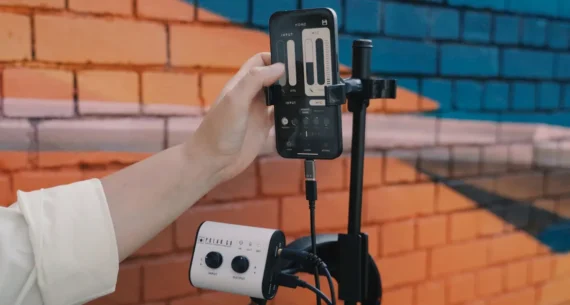
As the promo pic below suggests, you could take this down to your local park and track acoustic guitars – the birds and aircraft hum might even add a sort of field music authenticity to your work, open chords in the open air.

Those stereo mics have a lot of range. Blackstar says they’ll “capture anything from ASMR to a grand piano”.


Under the hood, there is a DSP engine that applies the onboard reverb, compression, EQ and noise control. The Polar Go is designed to be used by the novice and expert alike.

The Polar Go’s rechargeable battery will give you up to six hours of on-the-go recording time. The accompanying Polar Go app lets you shape the sounds you are recording.

There is onboard video recording support, so you can synch up your A/V, presets for podcasts, guitars, vocals and more to get you started, and a Magic Wand tool to gussy up your sound in an instant.

“Whether you’re a singer-songwriter, podcaster, livestreamer or filmmaker, Polar Go transforms your audio from phone-quality to studio-ready instantly,” says Blackstar. “Just plug in and create, anywhere, anytime.”

The Polar Go is available now, priced £79/$129. For more information, head over to Blackstar Amplification site.


iZotope Intros FXEQ Creative FX ‘5 Powerful Creative Effects’


New from iZotope comes an innovative multi-effects plugin that marks the next addition to its Catalyst series, a collection of easy-to-use plugins designed to help you quickly solve mix problems and remain in the creative flow.

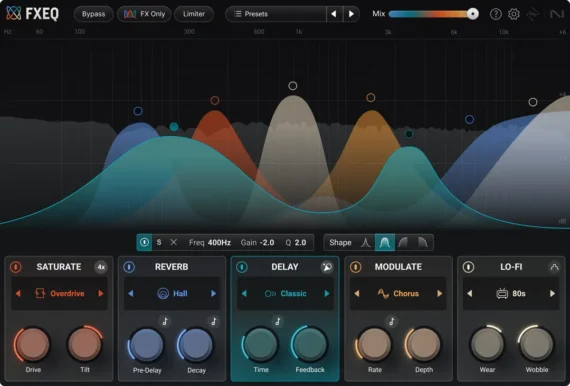
Intriguingly, FXEQ allows users to “paint” reverb, delay, lo-fi and other effects directly onto sounds using an intuitive EQ-style interface, unlocking creative flexibility and sidestepping the “complex plugin routing and endless plugin stacks” required to achieve a similar effect.

In total, there are five creative effects on board, each with multiple modes and two central controls. Each effect module runs through its own six-band parametric EQ with four shapes and adjustable Q, giving you targeted control over its application across the frequency spectrum.

Those five effects are: Saturate, Reverb, Delay, Modulate, and Lo-Fi, with all of them accessible and tweakable through Catalyst’s familiar EQ-style interface.

FXEQ’s Saturation module offers eight saturation modes designed to give your sounds “weight, bite and fizz”, while the Reverb module features three distinct reverb algorithms, covering Hall, Plate and Chamber modes.

The plugin’s Modulate module brings chorus, flanger, phaser and doubler modes to the table, while Delay delivers four delay types spanning Classic, Reverse, Crunch and Modulation, complemented by Time and Feedback controls. Finally, a Lo-Fi effect recreates the nostalgic tones of vinyl, cassette, tape and radio.

All five of FXEQ’s modules has its own parallel signal path, processing the input signal independently before the results are combined and passed through a global zero-latency limiter at the output stage.

Compatible with macOS and Windows and available in AAX/AU/VST3 formats, iZotope’s FXEQ is priced at $49/£49. Find out more at iZotope site.