Archive for April, 2023

Applied Acoustics Systems introduces Multiphonics CV-2 Modular Synth and FX Plugin

Applied Acoustics Systems has introduced Multiphonics CV-2, a major update to their cross-platform software modular synthesizer and effects plug-in.

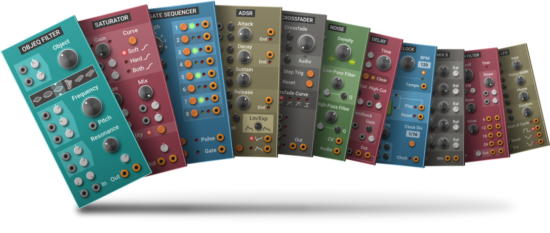
Multiphonics CV-2 is a sophisticated modular environment for assembling and playing synth and effect patches. The new version ships with a comprehensive library of modules and a vast library of patches.

“Multiphonics CV-2 can now be used as an effect in a DAW and process audio inputs, which opens up a whole new world of creative possibilities” says Benoit Charland, lead product designer at Applied Acoustics Systems. “The module library has been augmented with a selection of modules specifically designed to take advantage of this new capability and make the creation of custom effects fun and efficient.”
New in Multiphonics CV-2:

  • Multiphonics can now be used as an effect processor
  • 15 new modules
  • 6 improved modules
  • 100 new effect patches
  • 50 new synth patches
  • Efficient stereo and multi-channel patching
  • Improved patch browsing
  • Scalable UI

Multiphonics CV-2 runs on both macOS and Windows in 64-bit host sequencers that support the VST2, VST3, Audio Units, and AAX Native formats.

Multiphonics CV-2 is available now, with an intro price of $99 through May 15, 2023 (normally $149). Upgrade pricing is also available.
 

New Instrument, InstaChord, is Part Omnichord & Part Guitar

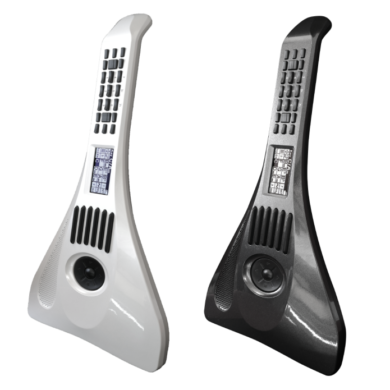
Yuichi Nagata has launched a crowdfunding project to fund production of an international version of the InstaChord, a new electronic instrument that is part Omnichord & part guitar.

Like the Omnichord, it features chord buttons that control which the notes that can be triggered when you strum it. But the InstaChord is held and played more like a guitar.

It can be used anywhere, because it has a rechargeable battery, headphone jack and built-in speaker. It has a built in sound module with 128 sounds. In addition, it has MIDI out via USB-C and Bluetooth LE.

The current domestic model has sold over 5,000+ units sold in Japan. The crowdfunding project will support the work needed to meet international certificate requirements.

Specifications:

  • Size: 420mm x W 210mm x H 50mm
  • Weight: 660g
  • Play Modes: Strum (like guitar strings), Hit (like piano keys), Push (Press harder for more volume)
  • Internal Instruments: 128 types, General MIDI standard
  • Sound Module: SAM2695 by Dream (France)
  • Playable chords: maj, m, 7, m7, M7, mM7, 6, m6, add9, madd9, sus4, dim7, aug, m7-5, slash chords (inversions)
  • Wired connection: Stereo line out, USB-C (recharge/MIDI)
  • Wireless connection: Bluetooth LE MIDI? iOS, Mac, QUCCOSOUND mi.1 cable typeB compatible?
  • Battery: 3400mAh, 10 hours play time, 8 hours recharge time

The InstaChord is available to project backers starting at about $376.

*Note: All crowdfunding projects can involve risk. See the project website for details.

Bastl Bestie is a 5-Channel Portable Stereo Mixer with ‘Sweet Overdrive Character’

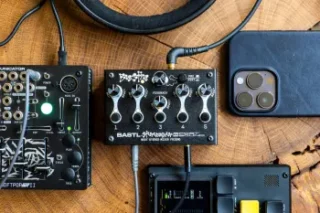
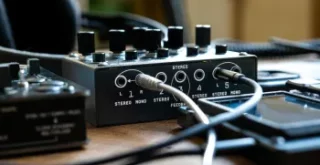
Bastl Instruments has introduced Bestie, a new portable stereo mixer that can run on battery power.

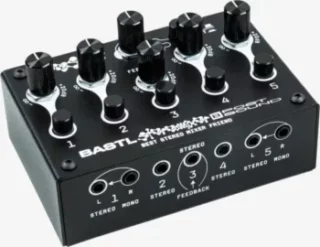
Bestie is a 5-channel stereo mixer with up to 20 dB boost, mute switch per channel, and flexible connectivity. Bestie is also a stereo distortion/saturator, with a pre-routed feedback channel that they say can create “juicy, crunchy sounds”

Mixing with Bestie can be pure vanilla, if you keep all the levels left of the 12 o’clock position. But once you start boosting, the sounds can start to fight for dominance.

A dedicated headphone output offers a loudness control with a smooth mixdown overdrive character and a pre/post mute switch, for previewing your channels before unmuting them to the speakers.

Channels 1 and 5 have a flexible connectivity scheme, accommodating 2x mono cable for left and right channels or 1x cable mono to split to both channels or a classic stereo jack.

Channel 3 serves as a feedback channel, which means it routes the output back to the input. If you plug anything into the Channel 3 input, it functions as a normal input channel. When utilizing Channel 3 as a feedback channel, the level before the 12 o’clock position functions as an added distortion and gain. If boosted beyond 0 dB, it will begin to self-oscillate and generate increasingly deeper tones as the channel is further amplified. At maximum settings, it produces distinct tremolo-like effects.

What they say about the feedback loop:

“A big part of the sonic aesthetics of Bastl Instruments and Casper Electronics is influenced by the so-called no-input-mixing technique. This is the technique of routing the output back to the input on mixing consoles and using gain and EQ to create different tones and noises without plugging any signals into the mixer.

However, fascinating outcomes arise when these feedback signals are interrupted by elements such as drums. They interact with the feedback tones and compete for dominance. Bestie is well suited for such experiments and directly encourages you to overload its circuitry and make the signals go ape.”


Features:

  • 5 stereo channels
  • Mute switch with light indication per channel
  • Level control per channel with up to 20 dB boost
  • Low noise preamps with sweet overdrive character (same as Dude)
  • Inputs via 3.5 mm stereo jacks
  • 5 mm jack output
  • 5 mm jack headphone output with loudness control
  • Pre/Post mute option for the headphone output (pre-listen)
  • Channel 3 is normalized to the output, making it a default feedback channel.
  • Channels 1 and 5 have two 3.5 mm jacks to also accept dual jack stereo or mono signals.

The Bestie is available now for €180.